

Newer
Custom Heat Sinks: Design, Manufacturing, and Selection Guide
When high performance processors and power electronics generate concentrated heat, engineers often choose between heat pipes and vapor chambers.
Heat pipes transfer heat along a defined path, making them suitable when the heat source and cooling area are separated.Vapor chambers spread heat across a wider planar area, making them effective for concentrated heat sources.
The right choice depends on heat flux, available space, mounting conditions, and production requirements.Understanding these differences helps engineers select the appropriate cooling solution for their application.
A heat pipe is a sealed tube containing a working fluid and internal wick structure. Heat vaporizes the fluid in the evaporator, and the vapor moves toward the condenser to release heat. The condensed liquid then returns through the wick structure.
A vapor chamber uses the same phase change principle inside a flat sealed chamber. Its internal structure allows vapor to spread across a wider area before condensation. The main difference is the geometry: a heat pipe provides a defined thermal path, while a vapor chamber provides broader planar heat spreading.
Heat pipes primarily transfer heat from an evaporator to a condenser along a defined path. This makes them suitable when the heat source and cooling area are separated or when heat needs to be routed around other components.
Vapor chambers spread heat laterally across their surface before transferring it to the attached cooling structure. This makes them suitable for concentrated heat sources that need to distribute thermal energy across a larger area.
For applications requiring flexible thermal routing, Heatpipe Cooling provides a practical approach to transferring heat between separated components.

The position of the heat source relative to the cooling area is another key selection factor. Heat pipes are useful when the main cooling structure needs to be positioned away from the heat source.
Vapor chambers are better suited to concentrated heat sources that can connect directly to a broad planar cooling surface. The chamber spreads thermal energy across its surface before transferring it to the fins.
| Thermal Parameter | Heat Pipe | Vapor Chamber |
| Structure | Sealed tubular structure | Flat sealed chamber |
| Heat transfer | Defined thermal path | Planar heat spreading |
| Heat source | Distributed or remote | Concentrated |
| Layout flexibility | High routing flexibility | Requires planar space |
| Main advantage | Remote heat transport | Broad heat spreading |
| Main consideration | Routing and condenser placement | Heat spreading and contact area |
Heat pipes provide greater flexibility when the thermal path must navigate around electronic components or mechanical structures. Their tubular geometry can connect a heat source with a remote heatsink and adapt to irregular layouts.
Vapor chambers require a more direct planar installation. They are less suitable for complex routing but can provide efficient heat spreading when enough flat space is available.
Vapor chambers can spread heat across a broad area within a relatively flat structure, which is useful for compact electronics. Heat pipes use tubular profiles, and their space requirements depend on pipe diameter, bending geometry, and condenser placement.
The choice depends on the dominant mechanical restriction. A vapor chamber may be preferred when broad planar spreading is needed, while a heat pipe can be more practical when the thermal path must navigate around surrounding components.
Mounting conditions affect how effectively heat moves from the source into the cooling structure. Vapor chambers generally require a suitable planar contact area between the heat source and chamber surface.
Heat pipes provide more flexibility when the heat source and cooling structure are separated. Their geometry allows the thermal path to be integrated into different heatsink configurations.
Heat pipes transfer heat efficiently along their defined thermal path, but the overall spreading area depends on pipe arrangement and condenser design.
A vapor chamber provides a wider planar surface for lateral heat distribution. This can help spread concentrated thermal loads across a larger fin area before the heat reaches the cooling structure.
High power processors and communication equipment can generate localized hotspots. Heat pipes address these loads by transferring heat away from the source toward a condenser and fin structure.
Vapor chambers distribute heat across a wider surface before it reaches the fins. This approach can help reduce thermal concentration when a high power source occupies a relatively small area.
Thermal uniformity becomes important when a concentrated heat source connects to a larger cooling structure. Heat pipe performance depends on pipe number, position, and contact with the heat source.
A vapor chamber can distribute heat across its surface before transferring it to the fins. This broader distribution can create a more uniform thermal load across the cooling structure.
For this type of integrated cooling design, Vapor Chamber Heatsinks provide a dedicated solution for electronic thermal management.
Heat pipes are useful when thermal energy needs to move between separated locations. They can connect processors, power components, or other heat sources with remote fin structures when direct heatsink placement is difficult.
Common applications include electronics, communication equipment, CPU cooling, and power electronics where flexible thermal routing is required.
Vapor chambers are useful for high power density electronics that require broader heat spreading. Their flat structure distributes heat laterally before it reaches the attached fins.
They can be used in computing, communication equipment, servers, networking hardware, and other systems where concentrated thermal loads must be distributed across a larger cooling area.
Both technologies can be used in server and data center equipment. Heat pipes can transport heat from processors, GPUs, or power devices toward remote fin areas, while vapor chambers can distribute concentrated thermal loads across a broader cooling surface.
Enner’s Thermal Management Solutions covers cooling approaches for server and data center equipment where high power density and limited installation space affect thermal design.
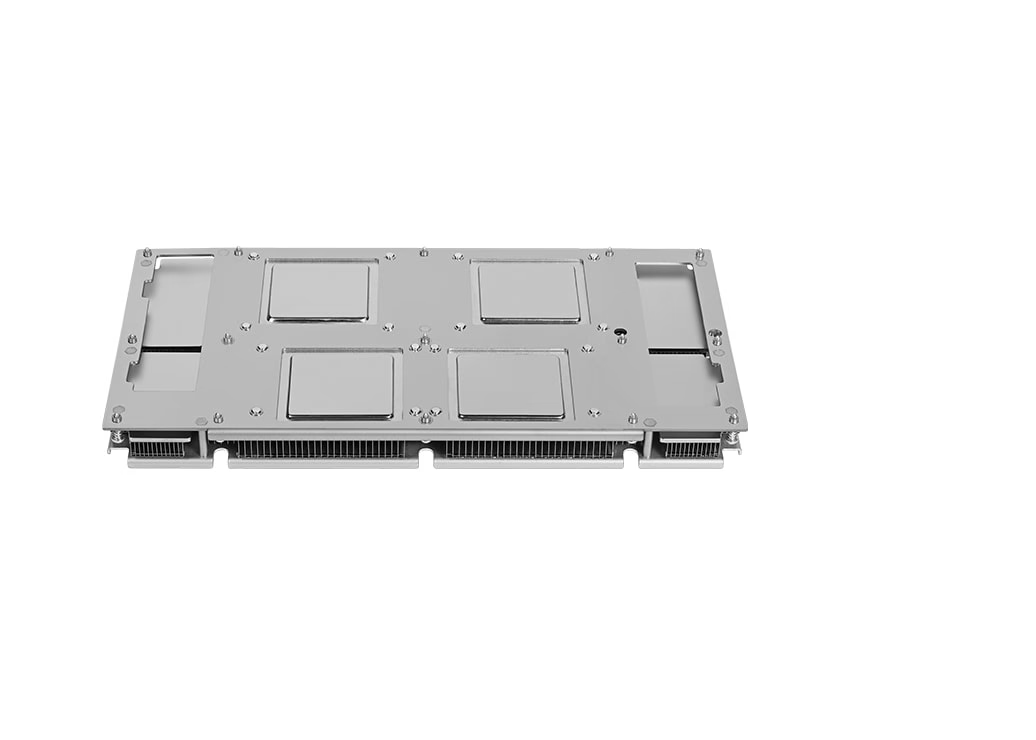
Heat pipe and vapor chamber designs require different approaches to geometry, internal structures, and heatsink integration. Heat pipes provide flexibility for routed thermal paths, while vapor chambers require a suitable flat configuration for heat spreading.
The cooling architecture should therefore be selected together with the mechanical design rather than based on thermal performance alone.
Production volume, dimensions, material selection, and assembly methods can affect the most practical cooling architecture. Prototype requirements may also differ from those of high volume production.
Engineers should define thermal and mechanical requirements first, then evaluate the manufacturing process needed for consistent production.
The cost of a custom thermal solution depends on materials, geometry, internal structures, tooling, production volume, and manufacturing requirements.
Heat pipes can be practical when flexible routing is required, while vapor chambers may justify additional manufacturing complexity when broad heat spreading is a critical requirement.
If the heat source and cooling area are separated, a heat pipe can provide an efficient path for transporting thermal energy. If the heat source is concentrated and positioned beneath the cooling assembly, a vapor chamber may provide more effective planar heat spreading.
Consider both vertical clearance and horizontal footprint. Heat pipes can accommodate complex routing and work around surrounding components. Vapor chambers require sufficient planar space but can provide broad heat spreading within a relatively flat structure.
Expected power dissipation, ambient temperature, airflow, and acceptable operating temperature should be evaluated before selecting the cooling architecture. Thermal performance should always be considered together with mechanical constraints and production requirements.
Neither technology is universally better. Heat pipes are useful when heat needs to move between separated locations, while vapor chambers are suitable for concentrated heat sources that require broader heat spreading. The right choice depends on the thermal and mechanical requirements of the application.
Yes. Vapor chambers can be advantageous when a concentrated heat source needs to distribute heat across a wider cooling area. Their planar structure allows thermal energy to spread before reaching the attached cooling fins.
Yes. A cooling assembly can combine different thermal technologies when the design requires both heat spreading and remote heat transport. The appropriate combination depends on the heat source, available space, cooling structure, and required thermal performance.
Heat pipes and vapor chambers use similar phase change principles but serve different thermal design needs. Heat pipes are well suited to applications requiring flexible heat transport between separated components, while vapor chambers provide broader planar heat spreading for concentrated heat sources.
The right choice depends on heat source location, thermal load, available space, mounting conditions, and production requirements. If you are unsure which solution fits your application, contact Enner’s engineering team to discuss your thermal requirements and explore a suitable cooling design for your project.