

Newer
How to Use Heat Sink Thermal Tape for Reliable Thermal Bonding
A round heat sink helps manage heat in compact electronic assemblies where space, component placement, and airflow limit cooling options. Its circular profile suits cylindrical housings and centrally mounted heat sources, while fin design affects heat dissipation.
Selecting the right solution requires balancing thermal resistance, material conductivity, fin spacing, mounting requirements, and manufacturing constraints.
The first step in designing a round heat sink is to establish how much heat the component generates and what temperature the system can tolerate. These requirements determine the thermal performance the heat sink must deliver within the available space.
Engineers should identify the component’s maximum junction temperature, operating ambient temperature, and power dissipation under expected working conditions. The temperature difference between the component and the surrounding environment defines the available thermal budget.
The complete thermal path includes the component package, thermal interface material, heat sink base, and surrounding air. Resistance at any stage can limit cooling performance, so evaluating the entire path is more useful than considering the heat sink alone.
In a round heat sink, heat often spreads from a central mounting area toward the outer fins. The base must conduct this energy without creating an excessive temperature gradient.
A thicker base may improve lateral heat spreading, but it also increases weight, material use, and overall dimensions. Engineers should balance base thickness against heat source size, power density, and the required temperature uniformity.
Once the thermal requirements are established, material selection and manufacturing methods determine how the design can be produced at the required cost and dimensional accuracy.
Aluminum is widely used in heat sink manufacturing because it combines relatively low weight, good thermal conductivity, and practical production costs. Alloy selection should account for thermal requirements, structural strength, corrosion resistance, and manufacturing compatibility.
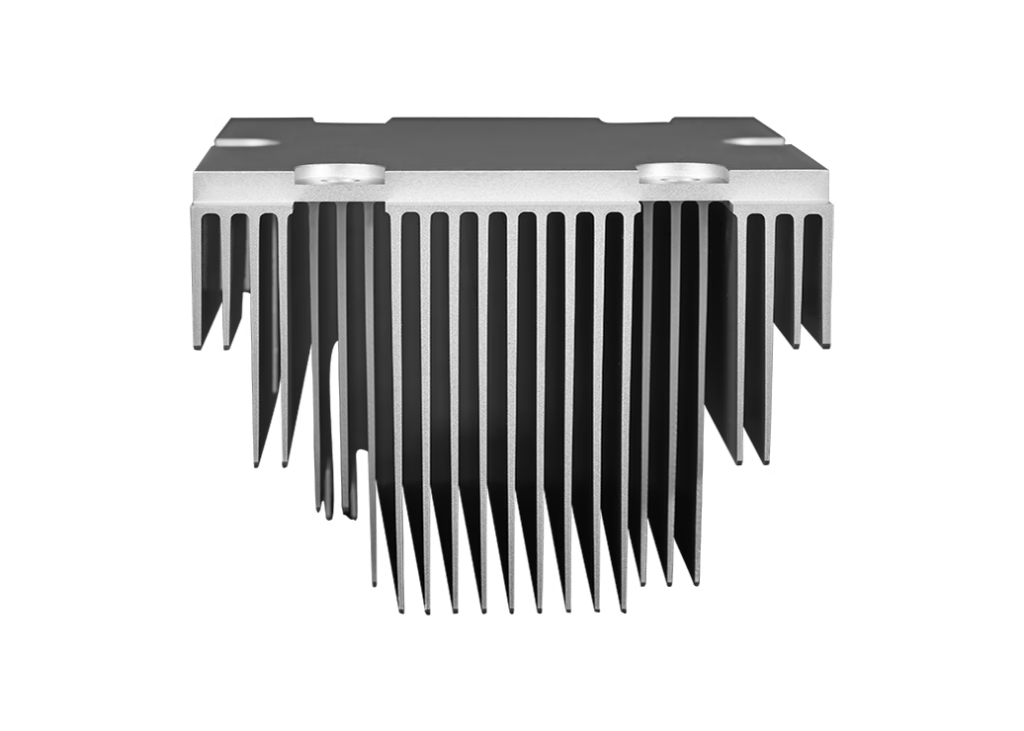
Extrusion is particularly useful when a design requires a consistent profile that can be produced in volume. Enner’s extruded aluminum heat sinks provide a relevant manufacturing reference for applications that need defined fin profiles and compact thermal structures.
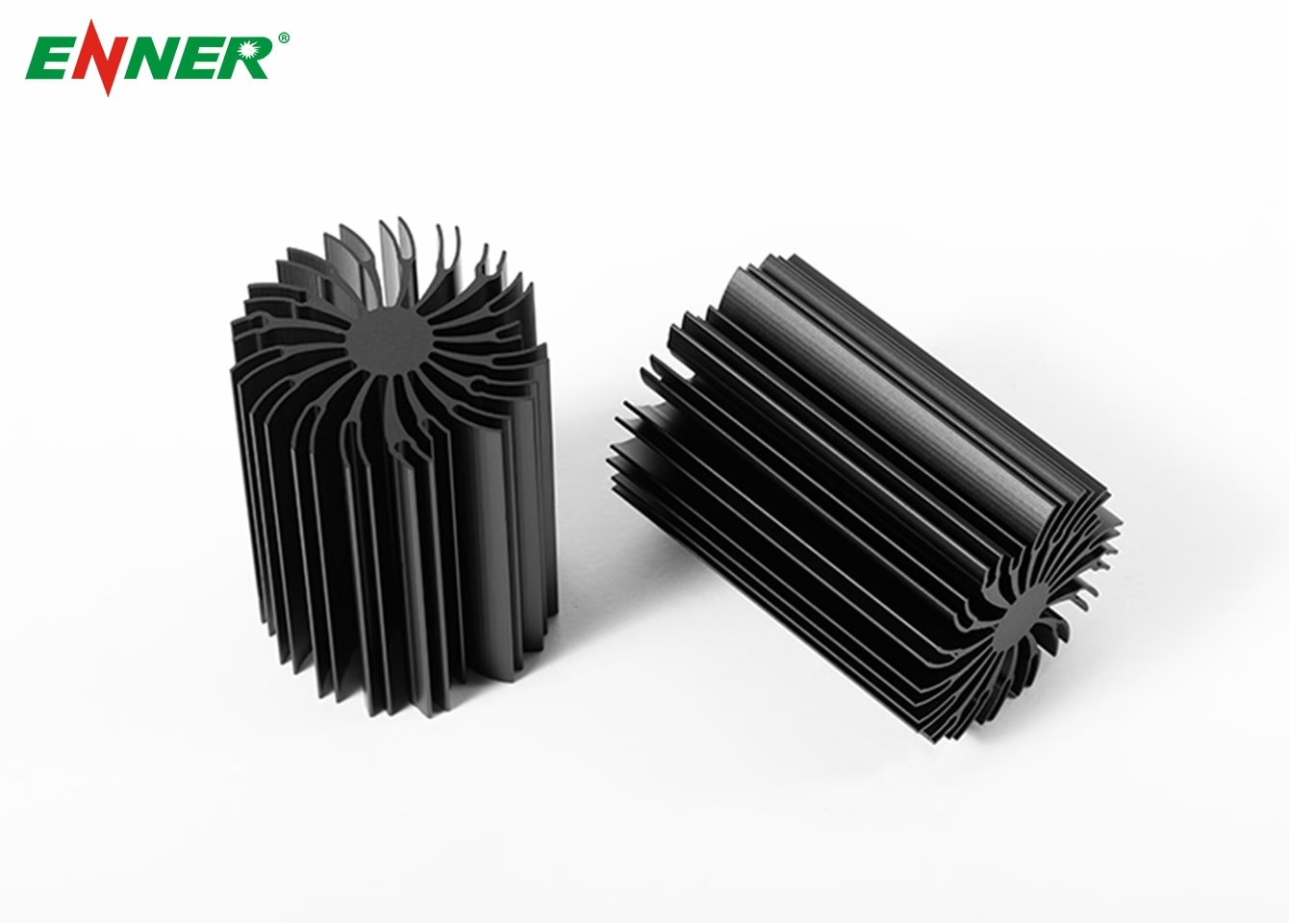
Surface treatments can improve corrosion resistance and alter surface emissivity. Anodizing is commonly used for aluminum heat sinks, particularly where appearance and environmental protection matter.
However, the impact on overall cooling depends on operating conditions. In many compact electronic assemblies, conduction through the base and convection from the fins have a greater influence on thermal performance than surface radiation alone.
The fin arrangement determines how much surface area is available for heat transfer and whether air can move effectively through the structure. A round heat sink needs a fin layout that matches its installation orientation and cooling method.
Radial fins extend outward from a central region, creating a circular arrangement that can accommodate airflow from multiple directions. This geometry can be useful when the heat source sits near the center of a round base.
The effectiveness of a radial layout still depends on fin height, thickness, spacing, and the available airflow. Enner’s extrusion heat sinks provide examples of aluminum heat sink profiles and fin geometry for compact electronic applications.
When a fan is not available, warm air must rise and cooler air must replace it. Fin spacing and orientation therefore influence how readily air moves through the heat sink.
Closely packed fins may increase surface area but restrict airflow. Wider gaps can improve air movement while reducing the amount of available fin surface. The best arrangement depends on the heat load, installation orientation, and enclosure conditions.
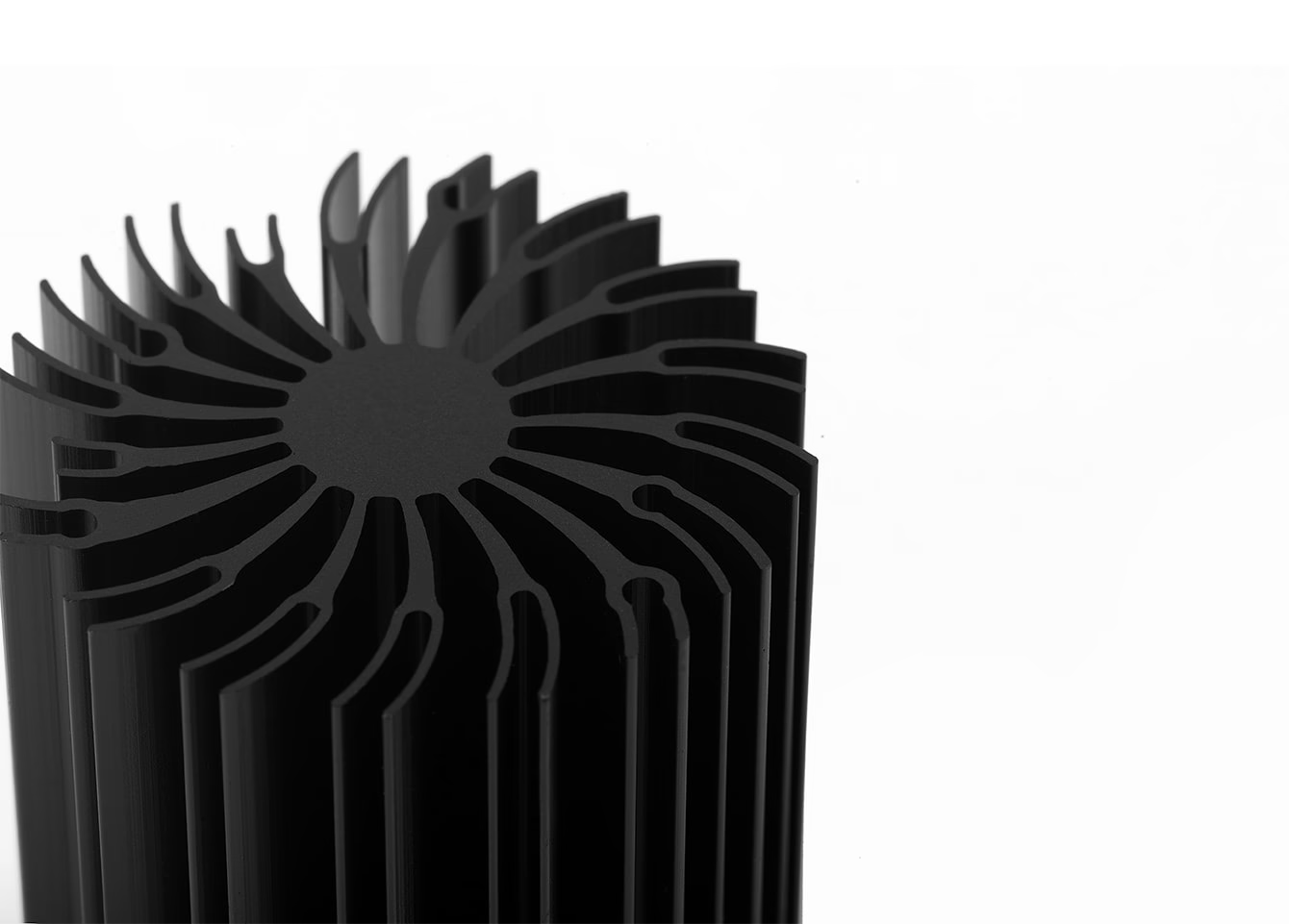
Increasing fin density is not always the best way to improve cooling. If the gaps become too narrow, airflow resistance can offset the benefit of additional surface area.
Fin thickness affects structural stability, material use, and the space available for airflow. Fin spacing must account for whether the system relies on natural convection or forced air.
For compact applications, engineers should evaluate fin height, pitch, and total heat sink diameter together. Testing different configurations can reveal whether additional fins improve heat transfer or simply make airflow more difficult.
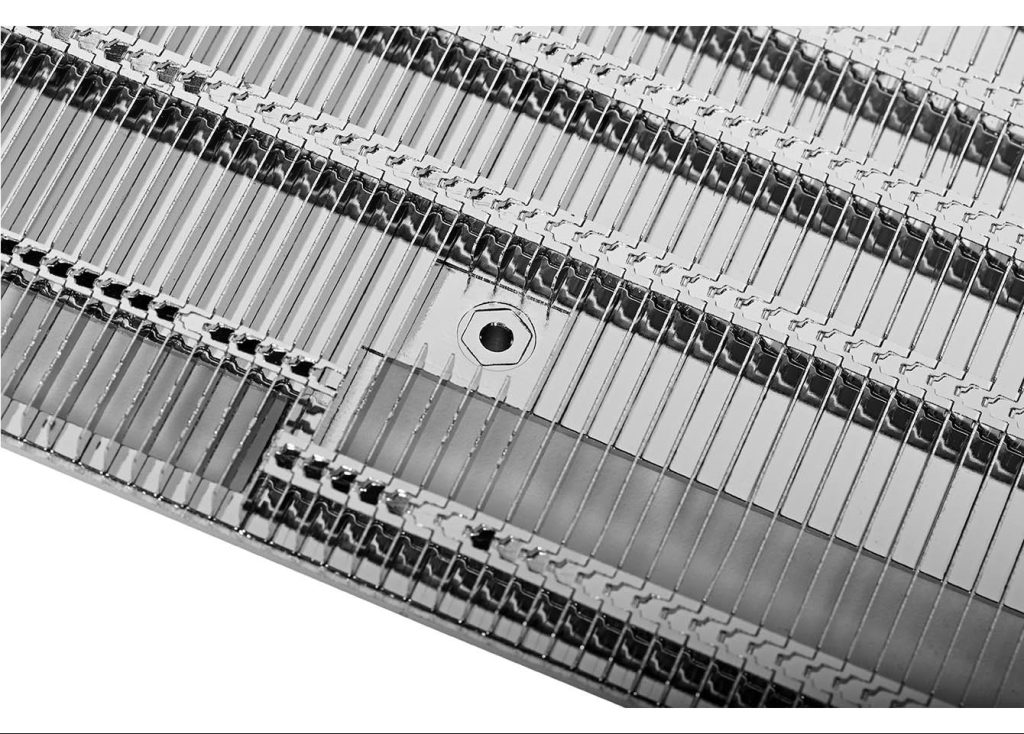
When a design needs thin fins within a limited footprint, skiving may provide an alternative to conventional extrusion. This process forms fins from a solid metal block, allowing a high fin density without separate fin to base joints.
Enner’s high density skived fins offer a relevant example of this approach. Skived heat sinks can be manufactured from materials such as aluminum or copper, with the final choice depending on conductivity, weight, geometry, and cost requirements.

A design that looks suitable in a CAD model may perform differently under actual operating conditions. Prototype testing helps confirm thermal behavior, mounting accuracy, and manufacturing feasibility before production begins.
Thermal simulations can help engineers identify temperature gradients, compare fin arrangements, and estimate cooling performance under defined boundary conditions. Airflow analysis is particularly useful when natural convection or fan placement affects the results.
Simulation accuracy depends on realistic material properties, heat loads, and airflow assumptions. Physical testing remains important for confirming predicted performance.
The interface between the electronic component and heat sink base affects heat transfer. Uneven contact, unsuitable thermal interface materials, or excessive mounting pressure can compromise performance or damage sensitive components.
Prototype evaluation should therefore include interface quality, mounting alignment, and thermal measurements under representative loads. Enner provides custom heat sink design services that are relevant when a standard profile cannot meet the application’s thermal or mechanical requirements.

A successful round heat sink design balances thermal resistance, material properties, fin geometry, airflow, and mounting requirements. Evaluating these factors together helps engineers develop compact cooling solutions that meet application needs without unnecessary material or space.
For project specific design guidance, discuss your heat sink requirements with Enner’s engineering team.