

Newer
Heat Pipe vs Vapor Chamber: Which Cooling Solution Fits Your Design?
Selecting the right heatsink for CPU applications helps control processor temperature, reduce thermal throttling, and maintain reliable operation under sustained workloads. The choice of material, fin structure, airflow, and heat transfer method directly affects the cooling performance of the final assembly.

Thermal management works by moving heat continuously from the processor die out into the surrounding air. Understanding the mechanics of heat transfer helps engineers evaluate how well a thermal module will perform under sustained workloads.
Metal parts alone cannot make perfect contact because microscopic gaps exist on their surfaces. Engineers use a thin interface layer to bridge these tiny spaces so heat can move freely.
This layer minimizes initial contact resistance between the processor lid and the baseplate.
Thermal conduction pulls heat straight off the processor and into the metal baseplate. Materials that move heat quickly speed up this first step.
The baseplate gathers the thermal load before passing it along to the larger cooling fins. For a detailed breakdown of these transfer phases, review how a heat sink works.
Once the heat reaches the metal structure, convection takes over to dump that energy into the room. Spreading the heat across specially shaped fins gives passing air more surface area to touch.
As fans blow air across these fins, the heat moves away through natural or forced airflow dynamics.Having looked at how heat moves through raw metal, we now need to see how specific material choices shape performance.
Choosing the right metal dictates overall heat transfer, weight limits, and how easily a part can be mass produced.
Designers must balance physical strength against cooling speed when building parts for dense server racks or factory enclosures.
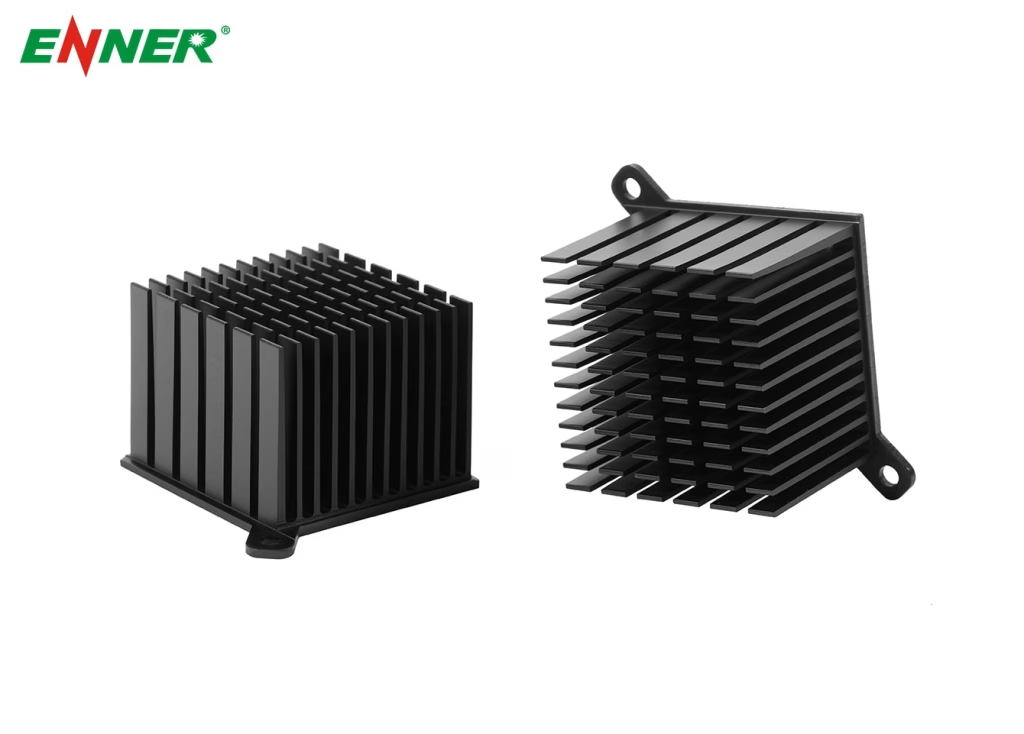
Aluminum is widely used for CPU heatsinks because it combines low weight, good thermal performance, and strong manufacturing flexibility.
Parts made using extrusion heat sinks let makers produce exact fin shapes over and over again with steady results.
Using AL 6063 extrusion stock provides a practical combination of thermal performance, low weight, and extrusion formability. This alloy provides excellent formability for complex fin geometries while maintaining dependable mechanical integrity.
Copper generally offers much higher thermal conductivity than aluminum, making it ideal for direct contact blocks and hot zones. Still, its heavier weight and higher cost mean making an entire cooler out of solid copper rarely makes sense.
Most efficient designs pair a copper base with aluminum fins or use copper inserts selectively in high heat flux regions.
| Material Type | Relative Thermal Performance | Relative Cost | Typical Application |
| AL 6063 Aluminum | Moderate to High | Moderate | Extruded fin profiles and general electronics cooling |
| Copper | Very High | High | High heat flux areas and thermal bases |
| Aluminum Copper Hybrid | High | Moderate to High | High power thermal management |
Building on material choices, let us look at advanced fluid transport designs built for extreme computing tasks.
Standard solid blocks hit a performance wall when thermal loads get too high. Modern chips create tiny, intense hot spots that require advanced fluid transport systems to keep temperatures under control.
Sealed copper tubes filled with a working fluid move heat away using a phase change cycle. When heat hits the hot end, the internal liquid turns to vapor, rushes toward the cooler end, drops off its heat, and flows back down through an inner wick structure.
A CPU heat source is typically concentrated on a small silicon die, whereas a fin stack offers a much larger surface area. Integrating heatpipe cooling helps engineers move heat away from localized sources and distribute it across a larger fin area for more effective heat dissipation.
With fluid transfer methods covered, we can move on to the physical and operational checks needed for system integration.

Procurement teams and design engineers should evaluate thermal requirements, physical constraints, airflow, and manufacturing conditions before finalizing a CPU heatsink. The right choice depends not only on processor heat output but also on the environment in which the heatsink will operate.
Start with the processor’s thermal design power and expected workload to estimate the heat load the cooling system must manage. CPUs used for sustained computing, rendering, or server workloads may require greater thermal capacity than processors handling intermittent tasks.
Engineers should also consider ambient temperature and operating targets rather than relying on TDP alone. Comparing the expected heat load with the heatsink’s thermal performance helps determine whether it can maintain stable temperatures during continuous operation.
Thermal resistance describes how effectively a heatsink transfers heat from the processor to the surrounding environment. Lower thermal resistance generally means less temperature rise for a given heat load.
When evaluating thermal resistance, consider the complete thermal path, including the interface material, baseplate, fin structure, and airflow. A large fin area cannot compensate for poor heat spreading or restricted airflow.
Physical dimensions can determine whether a CPU heatsink is suitable even when its thermal performance meets the required specification. Check the available height, base dimensions, fin width, and clearance around the processor socket.
Tall heatsinks may interfere with memory modules, voltage regulation components, cables, or enclosure panels. Compact systems may require thinner fins or alternative heat spreading methods to achieve sufficient cooling within a restricted footprint.
Airflow directly affects how efficiently heat moves from the fins into the surrounding environment. Determine whether the heatsink will rely on natural convection, a dedicated fan, or forced airflow from the system enclosure.
Fin spacing should match the available airflow conditions. Closely spaced fins can provide greater surface area but may also restrict airflow, while wider spacing can improve air movement in systems with limited fan pressure.
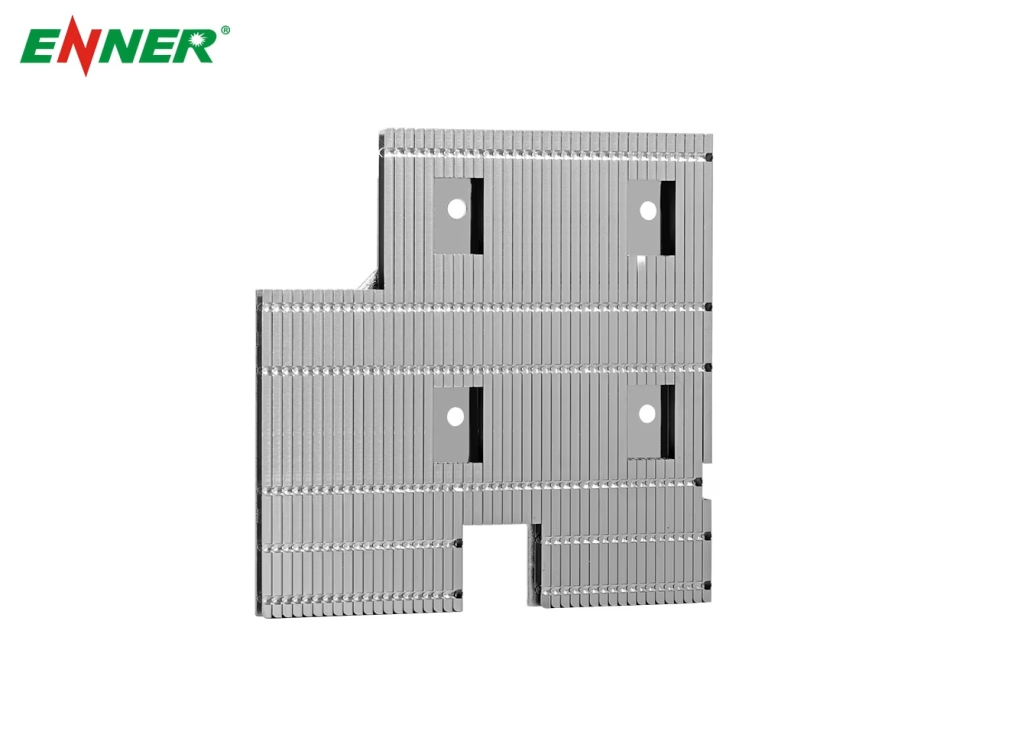
The manufacturing method should match the required heatsink geometry, production quantity, and cost target. Extrusion is suitable for repeatable aluminum profiles and high volume production, while skiving can produce closely spaced fins for applications requiring higher fin density.
Engineers should also consider tooling, CNC machining, surface treatment, tolerances, and inspection requirements. Selecting the manufacturing method early helps balance thermal performance with production efficiency and overall project cost.
Aluminum is widely used because it offers low weight, good thermal performance, and excellent extrusion capability. Copper can be used where higher thermal conductivity is required.
Suitability depends on the thermal load, fin geometry, airflow conditions, base design, and available installation space. While aluminum handles many standard workloads, high power processors may require hybrid designs or supplementary heat pipes.
Heat pipes are useful when heat needs to move from a concentrated source to a larger fin area. For moderate thermal loads, a conventional aluminum or copper heatsink may provide sufficient cooling without heat pipe integration.
Building a solid cooling system means balancing material properties, fin layouts, and advanced heat transfer methods. Getting these details right keeps enterprise hardware running smoothly under demanding operational conditions.
To discuss custom thermal solutions or request detailed engineering documents and pricing based on your specific thermal requirements, contact Ennergroup’s engineering team directly.