

Newer
Types of Heat Sinks: A Guide to Designs, Materials, and Applications
When high performance electronics generate excessive thermal loads, standard off the shelf components may not provide enough thermal management for demanding applications.
Engineers turning to custom heat sinks can address severe space constraints, high power density challenges, and complex mechanical geometries by tailoring the thermal solution to specific system requirements.
Developing a reliable thermal solution requires a structured engineering roadmap that connects thermal requirements with production feasibility.
For complex thermal challenges, engineers can evaluate prototypes before committing to production tooling. The development workflow begins by defining requirements such as target Thermal Design Power, maximum allowable junction temperatures, operating temperatures, and ambient conditions.

Once performance requirements are established, engineering teams translate them into suitable heat sink geometries. Leveraging dedicated Heat Sink Engineering capabilities allows developers to evaluate thermal requirements and develop appropriate structural designs.
Physical prototypes can then be fabricated and tested to verify performance under representative operating conditions.
The final design phase focuses on refining structural dimensions, tolerances, and surface finishes based on prototype evaluation. Once the design meets the required thermal and mechanical specifications, the validated solution can move into production.
This process helps align the final heat sink with both application requirements and manufacturing capabilities.Having outlined the general development workflow, we can now evaluate the specific metal shaping techniques that influence production feasibility.
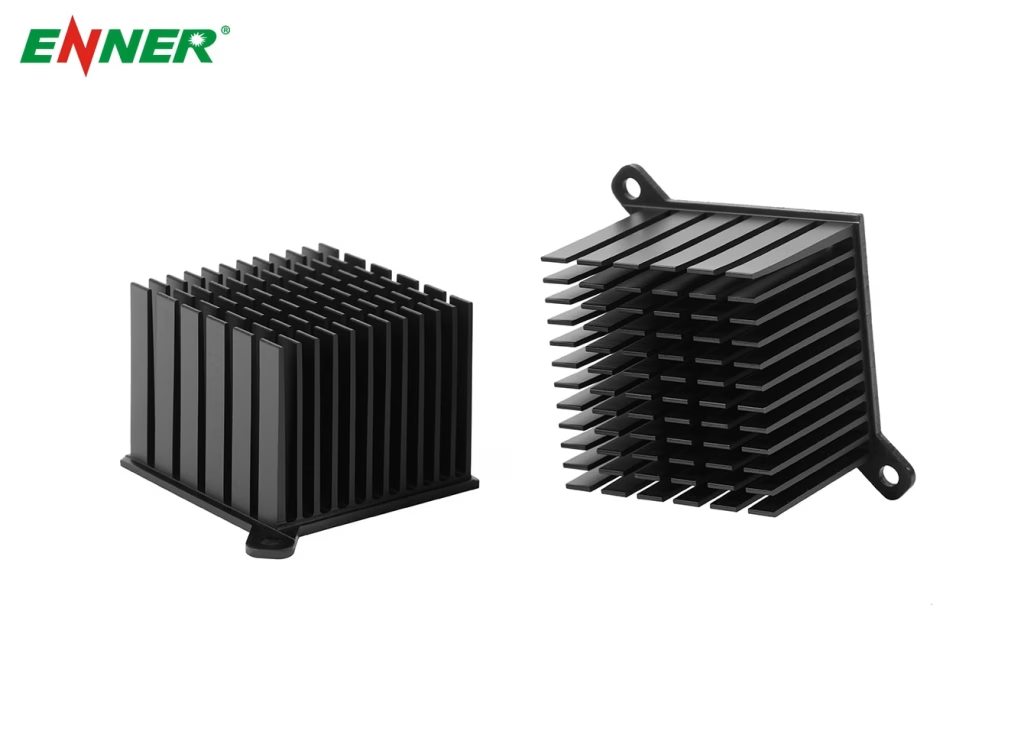
Selecting the correct manufacturing method influences both thermal performance and production economics. Aluminum extrusion is a practical foundation for many custom heat sink solutions because it balances weight, thermal conductivity, cost, and production scalability.
Standard and bespoke profiles are available through Extrusion Heat Sinks for applications requiring repeatable thermal performance and scalable production.
While extrusion provides the foundational profile, some applications require intricate geometric features that are difficult to achieve through extrusion alone.
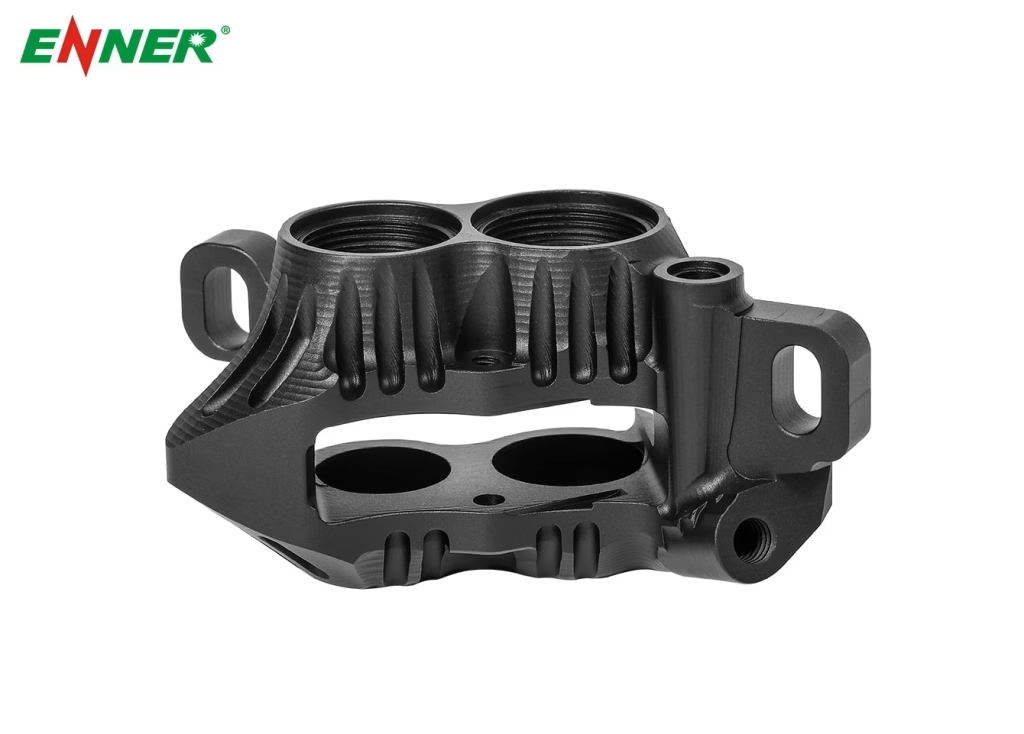
Precision CNC machining can transform extruded profiles into integrated hardware by adding mounting holes, threaded features, step cuts, flat surfaces, and other dimensional modifications required for final assembly.
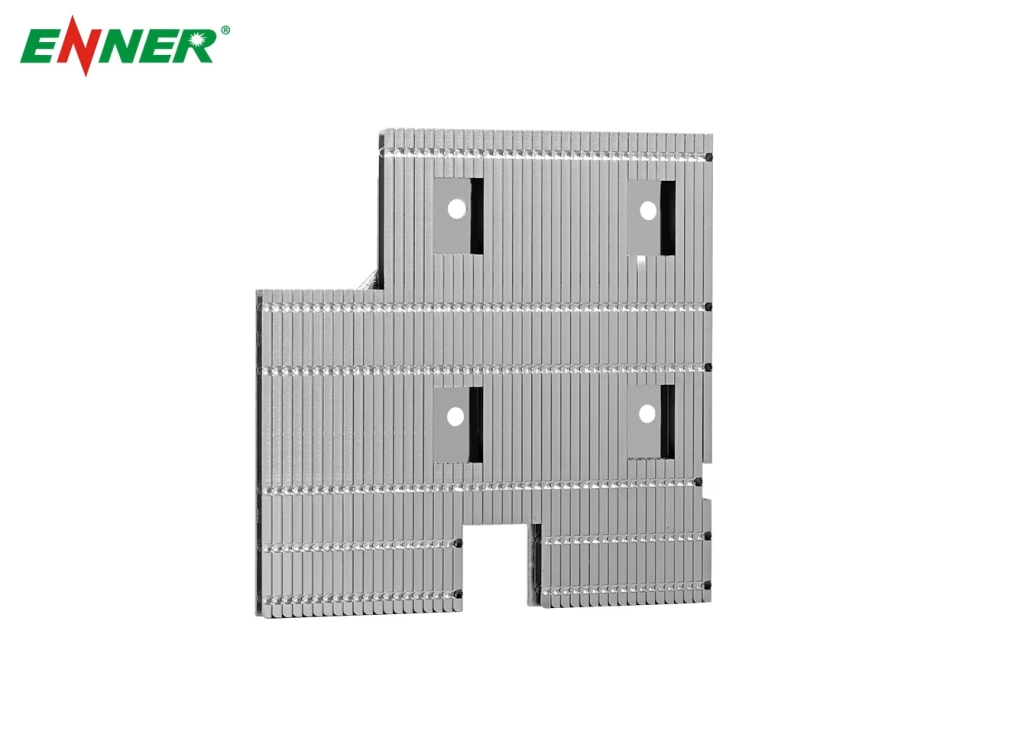
When an application requires higher fin density than a conventional extrusion can provide, skived fin structures offer another manufacturing option.
Skived manufacturing can produce high aspect ratio fin arrays from a single piece of metal, allowing high fin density and increased surface area for compact thermal applications.
| Manufacturing Method | Typical Use | Main Benefit |
| Aluminum Extrusion | High volume thermal applications | Scalable custom profiles |
| CNC Machining | Complex features and secondary operations | Precise mechanical integration |
| Skived Fin | High fin density applications | High aspect ratio fin structures |
Having reviewed core manufacturing technologies, let us look closely at how specific aluminum alloys influence overall material performance.
For applications requiring efficient heat dissipation and good extrusion characteristics, 6063 T5 Aluminum Heatsink is a suitable option for high power industrial, automotive, and consumer electronics.
Aluminum alloy 6063 offers good extrusion characteristics and thermal conductivity of approximately 200 W/m K, making it suitable for many extruded heat sink applications in consumer and industrial electronics.
When mechanical load handling takes greater priority, engineers may consider aluminum 6061 as an alternative. Aluminum 6061 generally provides higher tensile strength and structural rigidity than 6063, while its thermal conductivity is approximately 166 W/m K according to the comparison provided by Enner.
Alloy selection therefore requires a balance between structural requirements, thermal performance, and manufacturing considerations.
Now that we understand how alloy properties shape the physical part, we must address the secondary mechanical operations required for proper assembly.
Raw extruded profiles rarely meet every assembly requirement directly from the extrusion die. Secondary machining can prepare the heat sink for mechanical integration by adding precise mounting holes and tapped threads for fasteners.
These features allow the finished component to connect securely with the surrounding chassis or electronic assembly.
Beyond basic mounting holes, secondary machining can handle more complex geometric adjustments. Milling flat mounting interfaces helps establish consistent contact between the heat sink and heat source, while step cuts can provide clearance for adjacent circuit board components within compact electronic assemblies.
Dimensional control is important when a custom heat sink must fit accurately into a larger assembly. CNC Machining Parts can refine critical dimensions and contact surfaces so that the completed component meets the required mechanical specifications without creating unnecessary alignment problems or installation interference.
Now that we understand how secondary machining shapes the physical part, we must address how these components operate within restricted spatial boundaries.

As electronic devices become thinner and more powerful, internal volume becomes increasingly limited. Custom thermal hardware can be engineered around available enclosure dimensions, allowing engineers to balance fin height, base thickness, overall profile size, and usable surface area within the available space.
When internal space is strictly limited, specialized thermal configurations can be designed around compact electronic assemblies.
Embedded cooling configurations can work within available enclosure space, allowing the fin structure and overall heat sink dimensions to support an effective thermal path without requiring unnecessary additional volume.
Even with optimized spatial layouts, surface imperfections can compromise thermal transfer unless the thermal interface is properly controlled.
Even a carefully designed fin array can underperform if the thermal interface between the heat source and heat sink is poorly controlled.
Poor base flatness can create small air gaps between the two surfaces, increasing thermal resistance and reducing heat transfer efficiency across the mounting boundary.
Because air has much lower thermal conductivity than metals, small gaps can increase thermal resistance and reduce heat transfer efficiency.
Matching the heat sink base flatness with the requirements of the Thermal Interface Material helps maintain a more consistent thermal path across the contact area.
Before finalizing your specifications, review the following essential considerations addressing common technical questions.
Engineers should define expected power dissipation, maximum operating temperatures, and ambient conditions before initiating a custom thermal project.
These requirements provide the basis for determining the required heat sink dimensions, fin structure, and material selection.
Evaluating spatial boundaries helps ensure that the custom profile clears surrounding board components and fits within the available enclosure.
Engineers should consider overall dimensions as well as fin orientation, mounting locations, and airflow paths during the design stage.
Choosing the appropriate alloy and surface treatment depends on thermal, mechanical, and environmental requirements. Anodizing can provide additional surface protection, while the effect of the selected treatment on thermal performance should be considered during the design process.
Expected production volume influences the most suitable manufacturing approach and tooling investment. High volume applications may benefit from custom extrusion tooling, while lower volume or highly complex designs may require a greater proportion of secondary machining.
Custom heat sink cost mainly depends on material selection, tooling requirements, production volume, profile complexity, and secondary CNC machining. Surface treatment and finishing requirements can also affect the final price.
Aluminum 6063 is a common choice for extruded heat sinks because it combines good thermal conductivity with favorable extrusion characteristics. Aluminum 6061 offers higher structural strength when mechanical requirements are more demanding.
Yes, custom heat sinks can include secondary CNC features such as mounting holes, tapped threads, step cuts, and machined contact surfaces. These operations allow the profile to meet specific assembly requirements.
Yes, extruded heat sinks can be adapted for heat pipe or vapor chamber integration. These technologies provide additional heat spreading options for applications with concentrated or demanding thermal loads.
Custom heat sinks give engineers greater control over thermal performance, dimensions, materials, and mechanical integration. The right solution depends on factors such as heat load, available space, aluminum alloy, fin geometry, manufacturing method, and production volume.
Enner supports custom heat sink development from thermal requirements and engineering design through sample testing, design finalization, and production. If you need a custom heat sink for your next electronic application, contact Enner’s engineering team to discuss your thermal and mechanical requirements.