



















Newer
Heatsink for CPU: How to Choose the Right Cooling Solution
CNC metal milling uses computer controlled cutting tools to shape raw metal into components with complex geometries and controled dimensions.
For procurement engineers, balancing material selection, machine configuration, and tolerance requirements is essential to optimizing both part performance and production costs.
The following sections examine how these core variables affect CNC metal milling projects.
Modern precision manufacturing begins long before a cutting tool touches raw stock. Engineers translate computer aided design models into numerical data that machine tools can interpret.
Through a specialized computer aided manufacturing system, software analyzes complex geometries and generates a precise sequence of coordinates known as G code.
This code dictates every movement of the cutting tool and workpiece, ensuring that the final metal component matches the digital prototype.
High precision production relies on machine configurations that minimize human error and unnecessary repositioning. Enner uses Citizen turn mill combination machines from Japan, which integrate multiple machining operations into a single setup and reduce the need for additional clamping or repositioningg.
This configuration is particularly suitable for precision CNC Machining Parts used in applications where dimensional consistency and repeatability are important. Enner states that its turn mill combination machines can achieve tolerances as tight as 0.002 mm for suitable high precision parts, while typical commercial parts are produced to ±0.01 mm.
Building on how software turns digital blueprints into physical machine paths, the next consideration is how material selection affects the machining process.
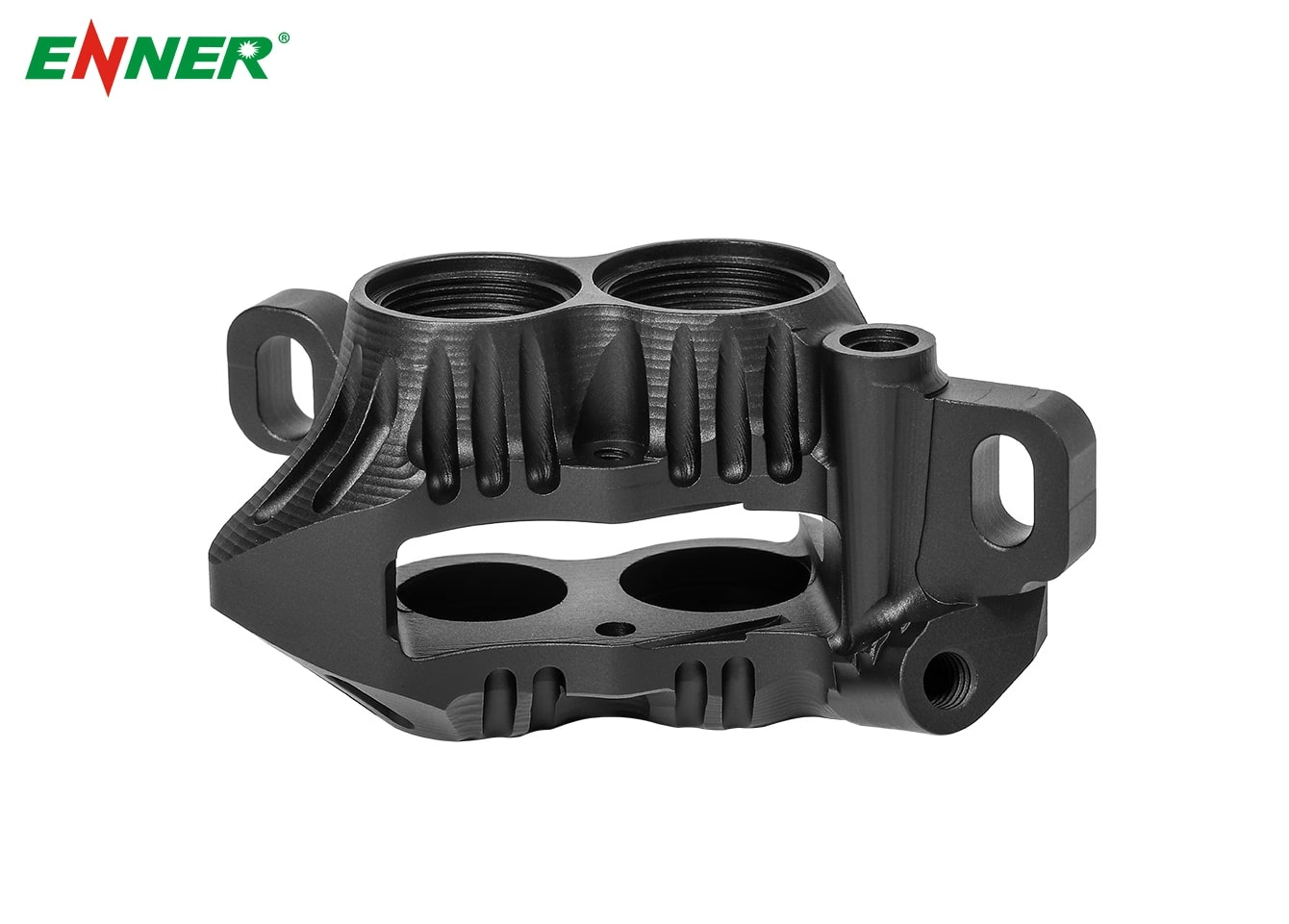
Selecting the appropriate raw material dictates both the functional performance and the cost efficiency of the milling process. Aluminum remains a staple in the industry due to its high machinability, lightweight properties, and excellent thermal conductivity.
When projects require these properties, Engineers may consider Aluminum CNC Machined Parts for lightweight structural and thermal management applications.
Different industries impose distinct physical demands on milled components. In the telecommunications and high frequency equipment sectors, light metal housings must provide structural integrity while shielding internal circuitry.
Components such as aluminum housings for projector units, copper covers, and specialized amplifier enclosures leverage specific metal properties to manage thermal loads and prevent electromagnetic interference during continuous operation.
| Alloy Category | Key Property | Typical Application |
| Aluminum Alloys | Low density and good machinability | Housings and brackets |
| Stainless Steel | Corrosion resistance | Medical and industrial components |
| Titanium Alloys | High strength to weight ratio | Aerospace components |
| Copper Alloys | High electrical and thermal conductivity | Electrical components |
Once you have settled on the ideal metal alloy for your application, the next step involves matching your part geometry to the right machine configuration.
Traditional 3 axis milling machines move a cutting tool across standard linear axes, which is highly efficient for flat plates, pockets, and standard prismatic parts.
However, components requiring complex undercuts, angled holes, or organic contours often face geometric restrictions because repositioning the workpiece manually introduces alignment errors and increases total production time.
To overcome axis limitations, advanced manufacturing lines incorporate multi axis technology. Simultaneous multi axis motion allows the cutting tool or the workpiece to rotate across rotational axes, enabling the machining of intricate components in a single setup.
This capability eliminates errors associated with multiple repositioning cycles and improves overall surface finish continuity.
With your machine setup sorted out, the focus naturally shifts to dialing in the right cutting speeds and selecting durable tools for the job.
Achieving high dimensional accuracy and smooth surface textures requires precise calibration of cutting parameters. Spindle speed, feed rate, and depth of cut must be balanced according to the material, tool geometry, and machining operation.
Inappropriate cutting parameters often lead to accelerated tool wear, chatter marks, and compromised surface smoothness.
Tool selection directly influences machining efficiency and component quality. Solid carbide tools offer superior rigidity and heat resistance, making them ideal for high speed milling of tough alloys like stainless steel and titanium.
Coated cutting tools further extend tool life by reducing friction and thermal shock at the cutting edge, preventing common shop floor complications such as cutter deflection and unexpected chipping.
Even with perfectly tuned cutting speeds, removing large amounts of metal introduces internal stress that can easily distort your finished parts if left unchecked.
Raw metal stock frequently contains internal residual stresses from rolling and heat treatment processes. When material is aggressively removed from one side of a part during milling, these internal forces are unbalanced, causing the remaining metal to warp or bow.
Controlling this phenomenon requires balanced roughing passes, symmetric material removal strategies, and stress relieving intermediate heat treatments for critical high tolerance components.
Frictional heat generated during high speed metal cutting can cause localized thermal expansion, leading to dimensional inaccuracies once the part cools down.
Appropriate coolant strategies and workholding methods can help control heat generation and part movement during machining.
When the milling stage is finished, applying the right surface finish gives your parts the final touch for real world durability and appearance.
Enner states that its turn mill combination machines can achieve tolerances as tight as 0.002 mm for suitable high precision parts. For most commercial parts, the company typically works to ±0.01 mm, while tighter tolerances are available on request.
Tight dimensional requirements should be verified with calibrated measuring equipment to confirm that critical features meet the specified drawings and tolerances.
Raw milled metals often require secondary finishing to improve wear resistance, aesthetic appeal, or environmental durability. Aluminum components frequently undergo anodizing to build a protective oxide layer that enhances corrosion resistance for demanding service environments.
Depending on the application, milled components may also require deburring, blasting, plating, or other secondary finishing processes.
CNC metal milling costs depend on material, part geometry, machining time, tolerance requirements, production volume, and secondary processes. More complex geometries and tighter tolerances generally require additional machining time and inspection.
Enner states that its turn mill combination machines can achieve tolerances as tight as 0.002 mm. For most commercial parts, typical tolerances are ±0.01 mm, with tighter tolerances available on request and verified with calibrated measuring equipment.
CNC machined parts are commonly used in industries where dimensional control and repeatability are important. Enner specifically identifies aviation, medical, automotive, electronics and telecommunications, and industrial equipment applications for its CNC Machining Parts.
Managing cutting forces, selecting proper tool paths, and preventing issues like cutter deflection or overcutting help minimize surface flaws and dimensional errors. You can review common shop floor remedies in 3 Common Cutting Issues in CNC Machining.
CNC metal milling requires careful balancing of material selection, machine configuration, and process control to maintain dimensional consistency. Enner delivers precision components using Citizen turn mill combination machines from Japan, achieving tolerances as tight as 0.002 mm alongside standard commercial tolerances of ±0.01 mm. To discuss your project specifications and secure an engineering quote, contact the Enner group team today.