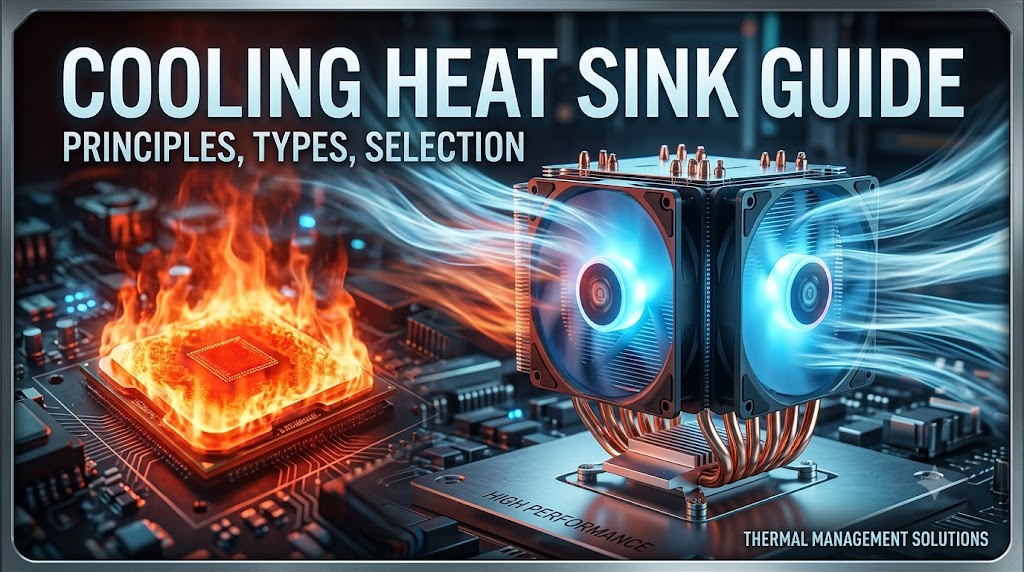
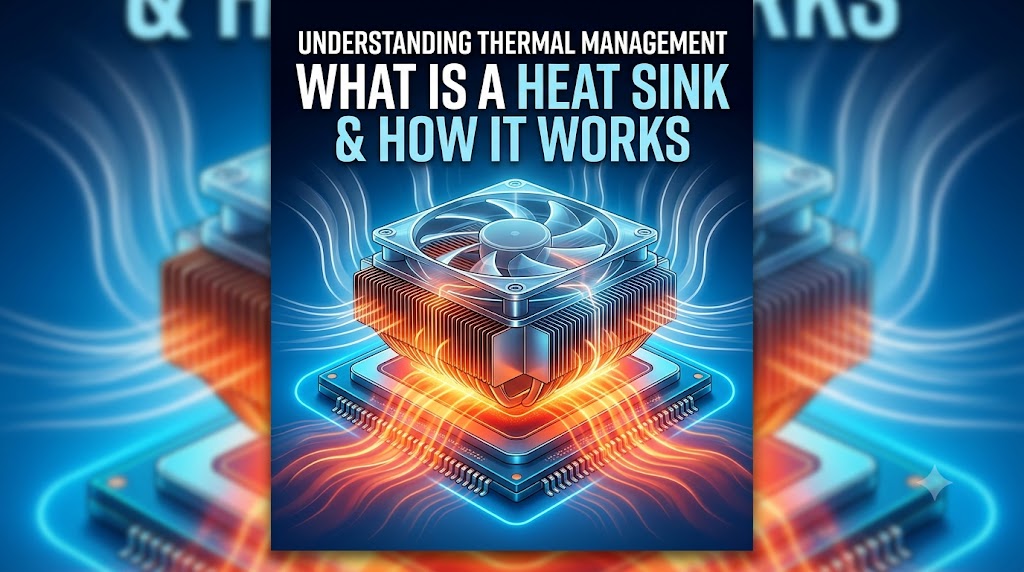
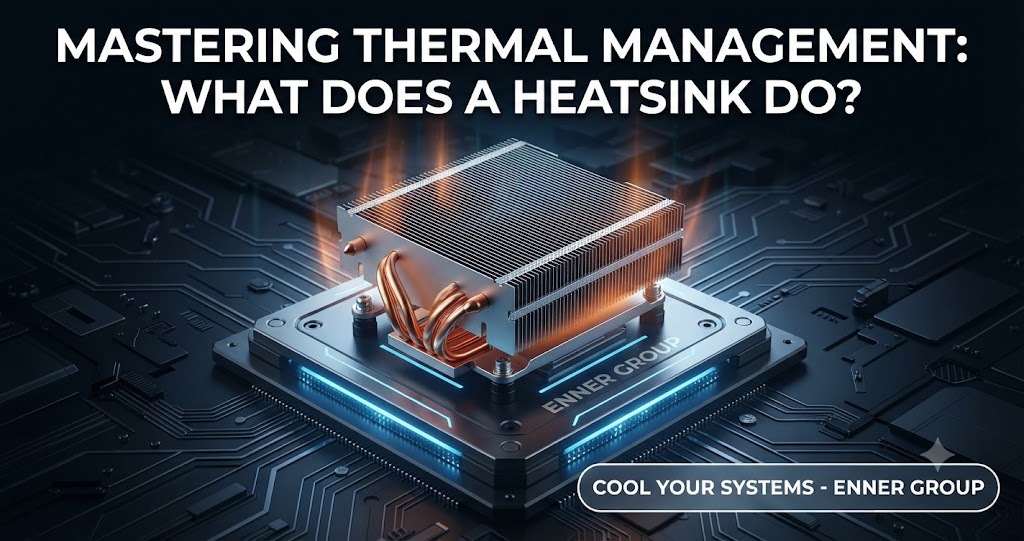
Choosing the right extruded heatsink is essential for maintaining the performance, reliability, and lifespan of power electronics. Factors such as heat load, available space, airflow conditions, and material selection all influence cooling efficiency. This guide explains the key considerations when selecting an extruded heatsink, helping engineers and designers find the most effective thermal solution for their applications.
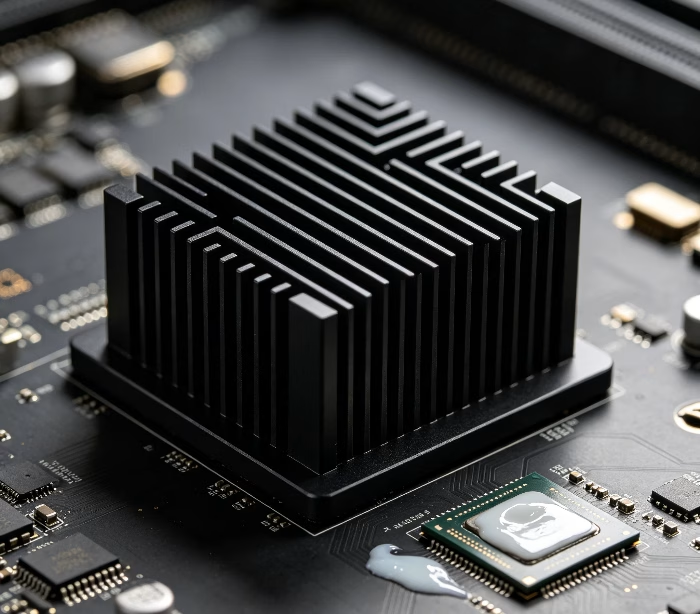
Why Extruded Heatsinks Are Ideal for Power Electronics
Extruded heatsinks are widely used in power electronics because they offer an excellent balance of thermal performance, cost efficiency, and design flexibility. Manufactured from aluminum alloys with high thermal conductivity, they efficiently transfer heat away from power semiconductors, converters, inverters, and other heat-generating components.
The extrusion process allows manufacturers to create a wide range of fin configurations that maximize surface area and improve heat dissipation. This flexibility makes extruded heatsinks suitable for both natural convection and forced-air cooling applications.
Another advantage is their cost-effective production, especially for medium- to high-volume projects. Compared with machined or bonded-fin heatsinks, extruded heatsinks provide reliable thermal management while keeping manufacturing costs under control.
In addition, aluminum extruded heatsinks are lightweight, corrosion-resistant, and easy to customize through secondary processes such as cutting, drilling, CNC machining, and surface treatments. These benefits make them a preferred cooling solution for power supplies, industrial automation equipment, renewable energy systems, electric vehicles, and other power electronic applications.
Assessing the Thermal Requirements of Your Application
Before selecting a cooling solution, you need to clearly understand how much heat your system generates and how that heat behaves during real operation. This step is often overlooked, but it directly determines whether your device will run reliably or suffer from overheating and performance loss.
Start by identifying how much heat your system actually produces under real working conditions. Every electronic component generates losses during operation, and these losses are converted into heat. Instead of focusing only on nominal power, you should look at worst-case load conditions, because thermal design must survive peak stress rather than average use. When multiple components are involved, the combined heat output becomes the real driver of your cooling requirement.
After that, you need to understand the temperature limits of the most sensitive components in your system. Each device has a maximum junction temperature and recommended operating range. Once these limits are known, the allowable temperature rise becomes clear. If any component is close to its thermal limit, it will define the constraints of your entire cooling design, even if other parts run cooler.
The operating environment also plays a major role. A system working in a sealed enclosure behaves very differently from one exposed to free airflow. High ambient temperature, limited ventilation, or dusty industrial environments all reduce cooling efficiency. This is why the same heatsink can perform well in one application but fail in another.
Heat does not disappear on its own—it follows a defined path from the source to the surrounding air. In most systems, heat flows from the chip through the package, into the PCB, then into the heatsink, and finally into the air. Any resistance along this path slows down heat transfer and increases overall temperature. Improving one weak point in this chain often has a greater impact than simply increasing heatsink size.
Thermal resistance is the key parameter used to evaluate this entire process. It describes how much temperature rises for each watt of heat generated. A lower thermal resistance means better cooling performance. In practice, you need to ensure that the combined thermal resistance of the system stays within safe limits under full load conditions, not just typical operation.
A reliable thermal design also requires margin. Real-world conditions are rarely stable—components age, airflow changes, and loads fluctuate. Leaving extra thermal headroom helps ensure long-term stability and prevents unexpected failures caused by small environmental or operational changes.
In short, a proper thermal requirement assessment is not just about selecting a heatsink. It is about understanding heat generation, temperature limits, environmental conditions, and heat transfer paths together, so the final design remains stable and predictable in real applications.
Key Factors to Consider When Selecting an Extruded Heatsink
Choosing the right extruded heatsink is not only about fitting a component into available space. It directly affects thermal stability, long-term reliability, and how safely your system can operate under continuous load. A good selection always starts from understanding the real thermal demand of the application.
Thermal Load and Real Power Dissipation
The first thing to evaluate is how much heat your system actually generates under working conditions. Many designs fail because they only consider nominal power instead of real worst-case loss.
In practice, you should look at the total power dissipation of all heat-generating components, including peak operating conditions and simultaneous load scenarios. When multiple devices operate together, heat accumulation becomes more critical than individual ratings, and the heatsink must be able to handle the combined thermal output.
Required Thermal Resistance Level
Thermal resistance is one of the most important indicators when selecting an extruded heatsink. It defines how quickly heat can be transferred from the device to the surrounding environment.
A lower thermal resistance generally means better cooling capability, but it often requires a larger surface area or more optimized fin structure. The final selection should ensure that the junction temperature stays within safe limits even under maximum load and high ambient temperature conditions, with enough margin for real-world variation.
Fin Geometry and Heat Dissipation Efficiency
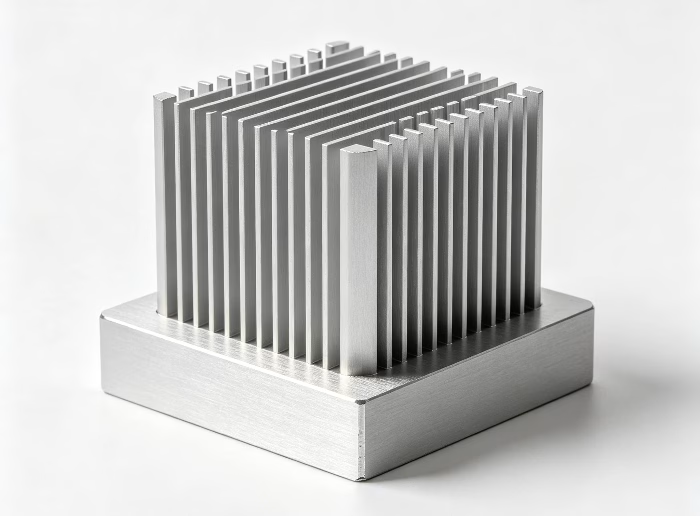
The performance of an extruded heatsink is highly influenced by its fin design. Since extrusion allows flexible profiles, fin shape becomes a key tuning parameter for thermal performance.
Fin height, thickness, and spacing all affect airflow behavior. Dense fin structures increase surface area but may restrict natural convection, while wider spacing improves airflow but reduces total surface area. The optimal design depends heavily on whether the system relies on natural convection or forced air cooling.
Material Performance and Heat Spreading Ability
Most extruded heatsinks are made from aluminum alloys because they offer a good balance between thermal conductivity, weight, and cost. However, not all alloys perform the same.
Higher thermal conductivity helps spread heat more evenly across the heatsink base, reducing localized hotspots. At the same time, corrosion resistance and mechanical strength become important in harsh or industrial environments, especially where long-term reliability is required.
Airflow and Installation Environment
Even a well-designed heatsink can perform poorly if the surrounding airflow is not considered. The same profile behaves very differently in open air compared to a sealed enclosure.
Natural convection environments require fin designs that encourage vertical airflow, while forced convection systems depend more on fin alignment with fan direction. Enclosure size, ventilation openings, and installation orientation all directly influence real thermal performance.
Mechanical Fit and System Integration
Thermal performance must always align with mechanical constraints. Space limitations often define the maximum allowable heatsink size, but mounting method and contact quality are equally important.
Secure installation ensures proper thermal interface contact, while poor mounting pressure or uneven surfaces can increase thermal resistance significantly. Weight, PCB layout, and surrounding components should also be considered to avoid airflow blockage or installation issues.
A well-selected extruded heatsink is always the result of balancing thermal performance, airflow behavior, material properties, and mechanical constraints. When these factors are properly aligned, the system can maintain stable operating temperatures even under continuous and demanding workloads.
Natural Convection vs Forced-Air Cooling
Choosing between natural convection and forced-air cooling is one of the most important decisions in thermal design. It directly determines heatsink structure, system size, noise level, and overall cooling capability. Each method has clear advantages, but also strict design limitations that must match the application environment.
How Natural Convection Works
Natural convection relies on air movement created by temperature differences. As the heatsink warms up, the surrounding air becomes less dense and rises, allowing cooler air to replace it. This continuous cycle removes heat without any external power source.
Because airflow is relatively slow and uncontrolled, the heatsink must be designed to maximize passive heat transfer. Vertical fin orientation is especially important, as it helps guide warm air upward more efficiently. In this type of cooling, surface area and fin spacing play a critical role, since airflow cannot be artificially increased.
Natural convection is commonly used in low to medium power systems, silent designs, and environments where maintenance-free operation is preferred.
How Forced-Air Cooling Works
Forced-air cooling uses fans or blowers to actively push air across the heatsink surface. This significantly increases airflow velocity, improving heat transfer efficiency and reducing overall thermal resistance.
Compared to natural convection, forced-air systems can support much higher thermal loads within a smaller heatsink footprint. Fin spacing can also be tighter because airflow is strong enough to pass through dense structures.
However, this method introduces additional considerations such as fan reliability, power consumption, acoustic noise, and long-term maintenance. If the fan fails, thermal performance can drop sharply, so system-level protection or redundancy is often required in critical applications.
Key Differences in Heatsink Design
The same extruded heatsink profile can perform very differently depending on the cooling method used.
Natural convection designs typically require wider fin spacing and taller profiles to encourage smooth vertical airflow. Forced-air designs, on the other hand, focus more on maximizing surface area density and aligning fins with airflow direction.
As a result, selecting the wrong airflow assumption can lead to serious thermal underperformance, even if the heatsink appears physically large enough.
Choosing the Right Cooling Strategy
The decision between natural convection and forced-air cooling should always be driven by system requirements rather than convenience.
Natural convection is ideal when silent operation, low maintenance, and simplicity are priorities, especially in moderate power applications. Forced-air cooling is more suitable for high-power density systems where space is limited and thermal loads are significantly higher.
In many real-world designs, a hybrid approach is also used, where natural convection handles baseline cooling and fans are activated only under peak load conditions.
A correct understanding of airflow behavior ensures that the extruded heatsink is not just properly sized, but also correctly matched to the real operating environment, resulting in stable and predictable thermal performance.
When to Choose a Custom Extruded Heatsink
A standard extruded heatsink works well for many applications, but it is not always the best fit when performance, space, or system requirements become more demanding. In these cases, a custom design becomes necessary to achieve stable and efficient thermal management.
When Standard Heatsinks Cannot Meet Thermal Requirements
If your system generates high or uneven heat loads, off-the-shelf heatsinks may not provide enough cooling capacity. This often happens in power electronics, high-current modules, or compact devices with limited airflow.
In such cases, a custom extruded profile can be designed to improve fin structure, increase surface area, and optimize heat flow based on real thermal data rather than general assumptions.
When Space or Mechanical Design Is Restricted
Many industrial and electronic systems have strict mechanical limitations. Standard heatsinks may be too large, too tall, or not compatible with PCB layout and enclosure design.
A custom solution allows you to adjust dimensions, mounting positions, and fin orientation to fit the available space while still maintaining thermal performance.
When Airflow Conditions Are Complex
In real applications, airflow is not always ideal. Some systems operate in sealed enclosures, while others combine natural convection and forced-air cooling.
Custom heatsinks can be optimized specifically for these conditions by adjusting fin spacing, direction, and geometry to match actual airflow behavior instead of relying on general designs.
When Long-Term Reliability Is Critical
For systems that must operate continuously or in harsh environments, thermal stability becomes a key reliability factor. A custom heatsink helps reduce thermal stress by improving heat distribution and lowering hotspots.
This is especially important in automotive, telecom, and industrial control applications where failure is not acceptable.
A custom extruded heatsink is the right choice when standard solutions cannot balance thermal performance, mechanical constraints, and environmental conditions. It ensures the cooling system is designed specifically for your application rather than adapted from a general-purpose model.