



















Newer
How to Choose the Right Extruded Heatsink for Your Power Electronics
Industrial equipment generates significant heat during continuous operation, especially in power electronics, automation systems, and communication devices. Without effective heat dissipation, excessive temperatures can reduce performance, shorten component lifespan, and increase the risk of equipment failure. Extruded heatsinks provide a cost-effective and reliable thermal management solution by maximizing surface area and improving heat transfer efficiency.
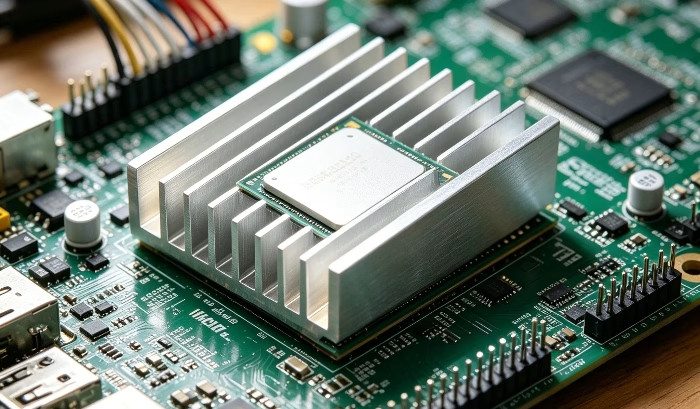
This article explores how extruded heatsinks enhance thermal management in industrial equipment, their key advantages, common applications, and the factors to consider when selecting the right heatsink for demanding industrial environments.
Thermal management plays a vital role in ensuring the stable operation of industrial equipment, especially in systems that run continuously under high load. Devices such as power supplies, motor drives, inverters, PLC systems, and communication modules all generate significant heat during operation. If this heat is not effectively controlled, internal temperatures can quickly rise beyond safe limits.
Excessive heat is one of the main causes of performance degradation and premature failure in industrial electronics. High temperatures can reduce the efficiency of semiconductor components, cause signal instability, and accelerate material aging. In severe cases, it may lead to unexpected shutdowns or complete system failure, resulting in costly downtime and maintenance.
Effective thermal management helps maintain components within their optimal operating temperature range, ensuring consistent performance and long-term reliability. It also reduces thermal stress on sensitive components, extending product lifespan and improving overall system safety. For this reason, efficient cooling solutions such as extruded heatsinks are widely adopted in modern industrial equipment designs.
Extruded heatsinks improve heat dissipation by increasing the surface area available for thermal exchange. Through the aluminum extrusion process, heatsinks can be formed with precisely designed fin structures that maximize airflow contact. This allows heat generated by electronic components to transfer more efficiently into the surrounding air.
Another key advantage is the use of high-thermal-conductivity aluminum materials. Heat is quickly conducted away from critical components and spread across the heatsink body, reducing localized hotspots. This uniform heat distribution helps maintain stable operating temperatures even under continuous or high-power loads.
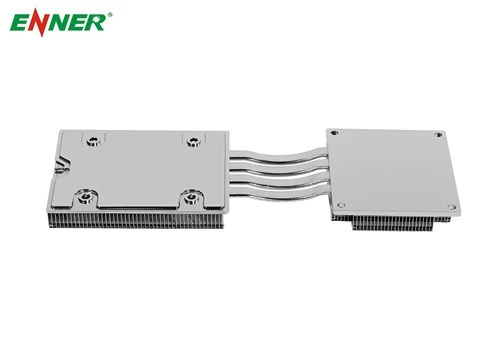
Extruded heatsinks offer several important advantages that make them a preferred thermal solution in industrial systems. One of the main benefits is their high thermal efficiency. The extrusion process allows for optimized fin designs that increase surface area and improve heat transfer, helping electronic components stay within safe operating temperatures.
Another key advantage is cost-effectiveness in mass production. Once the extrusion die is created, heatsinks can be manufactured consistently at relatively low cost, making them suitable for large-scale industrial applications without compromising performance.
Extruded heatsinks also provide strong design flexibility. Manufacturers can customize shapes, fin density, and sizes to match different power levels and installation environments. This makes them suitable for a wide range of equipment, from compact control units to high-power industrial drives.
In addition, they offer excellent durability and reliability. Typically made from aluminum alloys, extruded heatsinks are lightweight, corrosion-resistant, and capable of maintaining stable thermal performance over long operating cycles, even in harsh industrial conditions.
Choosing the right extruded heatsink is essential to ensure efficient thermal management and stable operation of industrial equipment. The selection process should start with understanding the heat load generated by the device. Higher power components require heatsinks with larger surface areas and optimized fin structures to effectively dissipate heat.
Material selection is another important factor. Aluminum alloys are commonly used due to their excellent thermal conductivity, lightweight properties, and corrosion resistance. In demanding environments, surface treatments such as anodizing can further improve durability and heat dissipation efficiency.
Airflow conditions also play a key role in performance. Systems with natural convection require heatsinks designed with wider fin spacing, while forced air cooling allows for denser fin configurations to maximize surface area. Matching the heatsink design to the actual airflow environment ensures better thermal efficiency.
Finally, size constraints and installation space must be considered. Industrial systems often have compact layouts, so the heatsink must balance thermal performance with mechanical fit. Proper selection ensures optimal cooling, improved reliability, and extended service life of industrial equipment.
Effective thermal management is essential for maintaining the performance, safety, and reliability of industrial equipment. Without proper heat control, high operating temperatures can lead to efficiency loss, component degradation, and unexpected system failures. As shown in the sections above, extruded heatsinks provide a practical and efficient solution by improving heat dissipation, increasing surface area, and ensuring stable thermal performance under continuous operation.
By combining material advantages, optimized fin structures, and adaptability to different airflow conditions, extruded heatsinks help industrial systems operate more reliably in demanding environments. Proper selection based on heat load, airflow, material, and installation space further ensures maximum cooling efficiency and long-term stability.
For companies like Ennergroup, focusing on industrial thermal solutions and engineering applications, understanding and applying effective heatsink design principles is critical to improving product performance and meeting the requirements of modern industrial systems.
Most extruded heatsinks are made from aluminum alloys due to their excellent thermal conductivity, lightweight properties, and corrosion resistance.
Yes. Many designs support natural convection cooling. However, in high-power applications, forced air cooling (fans) can significantly improve performance.
Key factors include heat load, fin design, airflow conditions, material selection, and available installation space in the system.
Yes. They can be customized in terms of size, shape, fin density, and surface treatment to meet specific industrial application requirements.