



















Newer
How to Cool IGBT Modules in Industrial Power Electronics
Aluminum extruded heatsinks are widely used in electronics cooling because they provide efficient thermal management at a relatively low cost. Their good thermal conductivity helps transfer heat away from electronic components quickly, ensuring stable performance and reducing the risk of overheating.
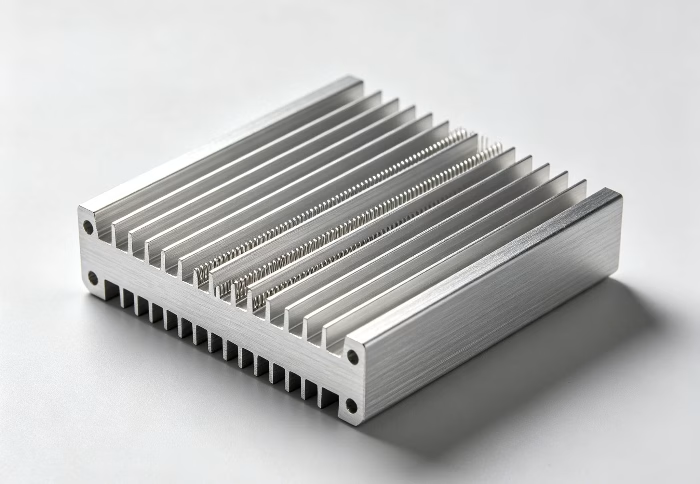
This makes them an important choice for engineers and manufacturers who need reliable cooling solutions in compact or high-power electronic systems. At the same time, the extrusion process allows flexible fin designs that increase surface area and improve heat dissipation, which is why aluminum extruded heatsinks are commonly adopted in modern electronic applications.
If you want to understand why aluminum extruded heatsinks have become the standard choice in modern electronics cooling, the key factors are explained below.
Aluminum is widely considered the ideal material for extruded heatsinks because it combines strong thermal performance with excellent manufacturability. Its relatively high thermal conductivity allows heat to spread quickly from electronic components across the heatsink surface, improving overall cooling efficiency and system stability.
Another key advantage is its suitability for the extrusion process. Aluminum can be easily shaped into complex fin geometries with high precision, enabling larger surface areas for better heat dissipation without significantly increasing weight or cost. This balance of performance, flexibility, and affordability makes aluminum the preferred choice for heatsinks used in electronics, automotive systems, LED lighting, and power devices.
Aluminum extruded heatsinks are widely used in electronics because aluminum provides excellent thermal conductivity, which allows heat to be transferred quickly from the heat source to the heatsink body. This rapid heat spreading is essential for preventing localized overheating, especially in high-power components such as CPUs, power transistors, LEDs, and inverters.
Once the heat is efficiently conducted into the heatsink, it is distributed across a larger surface area through the fin structure. This process significantly improves heat dissipation into the surrounding air, helping maintain stable operating temperatures even under continuous load conditions. As a result, electronic systems can run more reliably with reduced risk of thermal stress, performance throttling, or premature component failure.
In addition, the consistent thermal performance of aluminum makes it suitable for a wide range of applications where stable cooling is critical. From consumer electronics to industrial control systems, its ability to manage heat efficiently ensures longer service life and improved overall system efficiency without adding excessive weight or cost.
Compared with copper or other high-performance metals, aluminum offers a much lower density, which makes extruded heatsinks significantly lighter without sacrificing practical cooling capability. This weight advantage becomes particularly important in modern electronic systems where compact design, portability, and energy efficiency are key considerations.
On the manufacturing side, aluminum extrusion provides a highly efficient production method that supports large-scale output with relatively low cost. The process allows heatsinks to be formed into long, continuous profiles with minimal material waste, helping manufacturers reduce production costs while maintaining consistent quality across batches.
Another important factor is the flexibility of post-processing. After extrusion, aluminum heatsinks can be easily cut, drilled, anodized, or CNC machined to meet different design requirements. This makes it possible to balance performance, appearance, and durability without significantly increasing overall manufacturing complexity or cost, which is why aluminum remains a preferred solution for cost-sensitive yet performance-driven applications.
Aluminum extrusion provides strong design flexibility, making it suitable for a wide range of thermal management requirements. By adjusting fin geometry, thickness, spacing, and overall profile shape, manufacturers can optimize heatsinks for different airflow conditions and heat loads. This flexibility is especially important in modern electronics, where space is limited but heat generation continues to increase.
Another advantage is the ability to integrate functional features directly into the heatsink design. Mounting grooves, clip structures, or screw channels can be formed during extrusion, reducing the need for additional machining. This not only improves assembly efficiency but also helps ensure better thermal contact between components and the heatsink.
Through these design variations, aluminum extruded heatsinks can be tailored to meet specific application needs, from compact consumer electronics to high-power industrial systems requiring precise thermal control.
| Design Feature | Function | Typical Benefit |
|---|---|---|
| High-density fins | Increase surface area | Improved heat dissipation efficiency |
| Wide fin spacing | Enhance airflow | Better performance in natural convection |
| Pin fin structure | Multi-directional cooling | Suitable for low-airflow environments |
| Integrated mounting slots | Simplify installation | Reduced assembly time and cost |
| Asymmetrical profiles | Targeted heat distribution | Optimized for uneven heat sources |
Aluminum extruded heatsinks are widely used across electronics and industrial systems due to their reliable thermal performance and adaptable design. In electronic devices, they help manage heat generated by high-power components, ensuring stable operation and preventing performance degradation caused by overheating. Their efficiency and flexibility make them suitable for both compact consumer products and high-performance equipment.
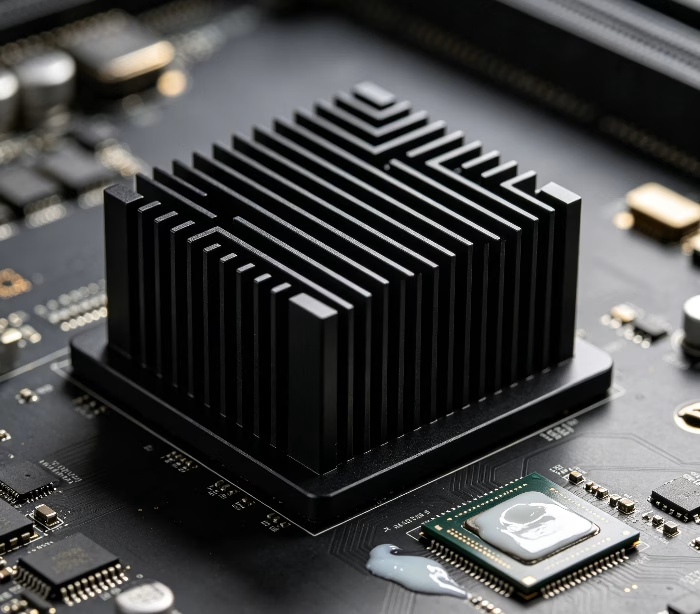
In LED lighting systems, extruded heatsinks play a key role in maintaining brightness stability and extending service life by effectively dissipating continuous heat output. They are also commonly used in power supplies, inverters, and motor drive systems where thermal control is critical for safe and efficient operation under varying load conditions.
Beyond consumer electronics, aluminum extruded heatsinks are widely applied in industrial automation, telecom base stations, and automotive electronics. These environments often involve long operating hours and high thermal stress, requiring robust and consistent cooling solutions. The combination of lightweight structure, cost efficiency, and scalable production makes aluminum extrusion a practical choice for these demanding applications.
Aluminum extruded heatsinks have become a standard solution in modern electronics cooling due to their strong balance of thermal performance, lightweight structure, design flexibility, and cost-effective manufacturing. From efficient heat dissipation and customizable fin structures to wide applicability across LED lighting, power electronics, automotive systems, and industrial equipment, they meet the demands of both performance-driven and cost-sensitive applications.
At Enner Group, we focus on delivering high-quality aluminum extruded heatsink solutions tailored to different thermal management requirements. With advanced extrusion capabilities and flexible OEM/ODM support, we help customers develop reliable and efficient cooling components for a wide range of electronic and industrial systems.