



















Newer
The Ultimate Guide to High-Precision CNC Machined Parts
Thermal throttling in high density power electronics rarely stems from a total lack of cooling. More often it occurs because an off the shelf thermal solution fails to balance thermal resistance airflow dynamics and manufacturing tolerances under sustained operational loads. When junction temperatures spike and system reliability hangs in the balance engineering teams must source high-performance heat sinks and align thermal simulation models with real world structural design to ensure long term product stability.
Quick Navigation Guide
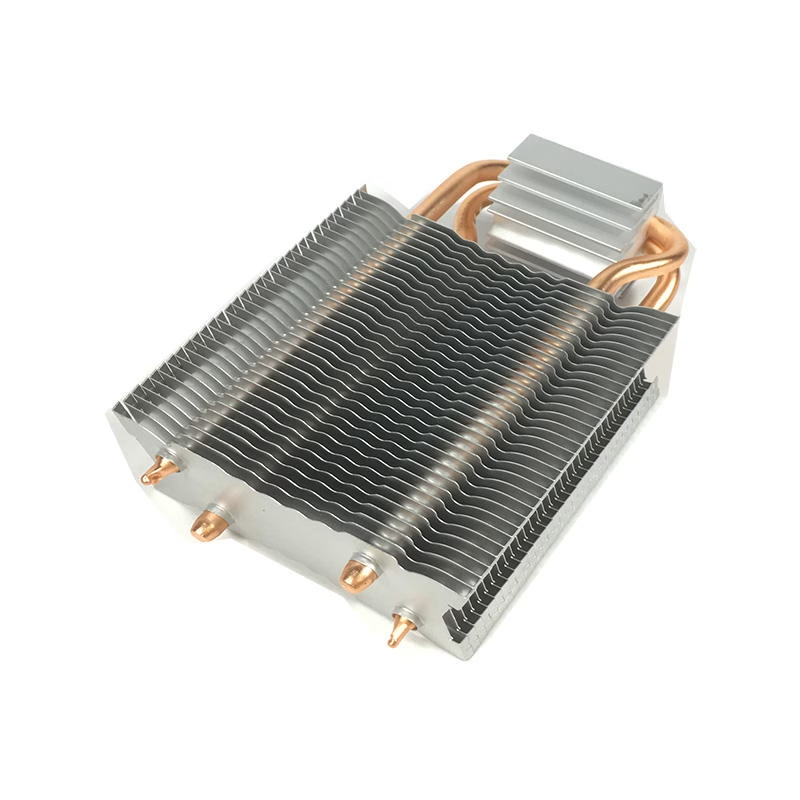
Evaluating heat dissipation hardware requires analyzing specific operational parameters that dictate system stability especially when dealing with high Thermal Design Power TDP components.
Strictly controlling Thermal Interface Resistance is non negotiable because even microscopic air gaps at the die base interface act as powerful thermal insulators directly undermining the bulk conductivity of the heat sink.
Optimizing pressure drop ensures smooth airflow across fin arrays without straining system fans while maximizing surface area increases convective heat transfer within restricted enclosure volumes.
Consider a recent scenario involving a telecom client utilizing standard aluminum profiles. During continuous 40 degrees Celsius environmental chamber testing their units experienced thermal throttling within 10 minutes. By upgrading to a hybrid skived fin and vapor chamber solution the engineering team achieved a reduction of 12 degrees Celsius in maximum junction temperature under identical ambient loads ensuring continuous unthrottled operation.
Every thermal hardware choice involves calculating physical manufacturing limits. Heat design engineers evaluating high-performance heat sinks must analyze aspect ratios and surface roughness Ra alongside general thermal efficiency to prevent assembly bottlenecks.
| Manufacturing Process | Max Aspect Ratio | Surface Roughness Ra | Thermal Efficiency | Relative Cost |
|---|---|---|---|---|
| Extruded Heat Sinks | 10 to 1 | 1.6 to 3.2 | Standard Base Line | Low |
| Skived Fin Heat Sinks | 50 to 1 | 0.8 to 1.6 | Very High | Medium |
| Vapor Chamber Heat Sinks | Custom Form Factors | 0.4 to 0.8 | Superior Planar Spreading | High |
| Zipper Fin Heat Sinks | 60 to 1 | 0.4 to 0.8 | High Forced Convection | Medium |
Note Extruded ratio refers to profile width to wall thickness Skived and Zipper ratios refer to fin height to gap.
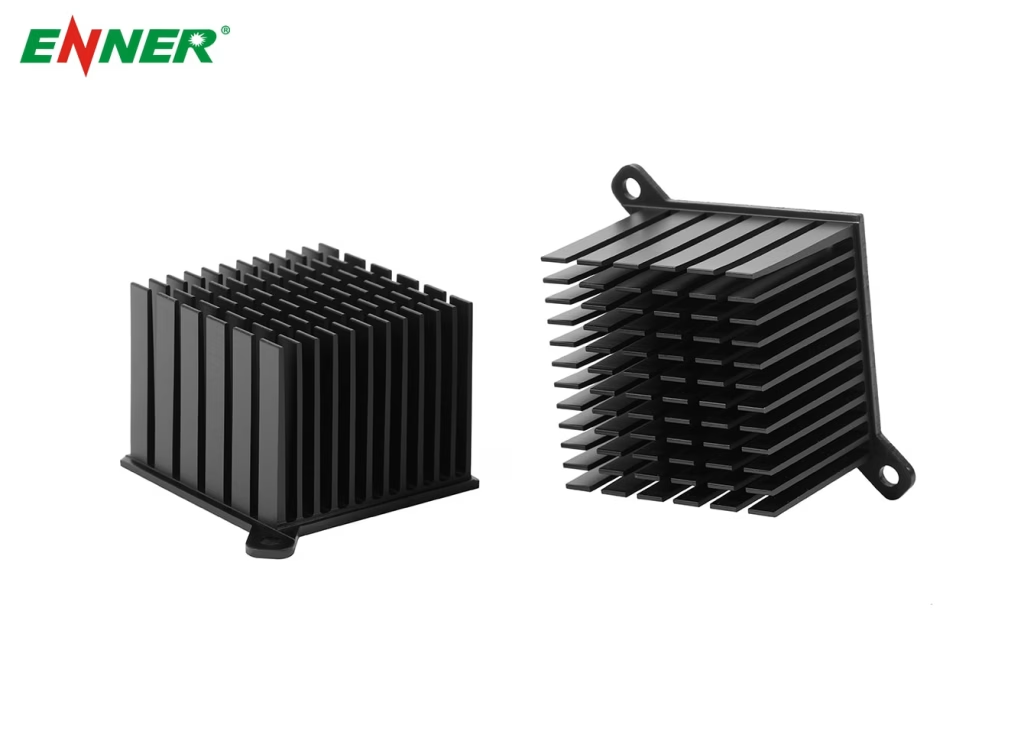
Standard Extruded heat sinks offer a cost effective baseline for moderate heat flux densities. When applications demand extreme surface area Skived fin heat sinks provide continuous thin fins sliced directly from solid metal blocks eliminating joint resistance entirely.
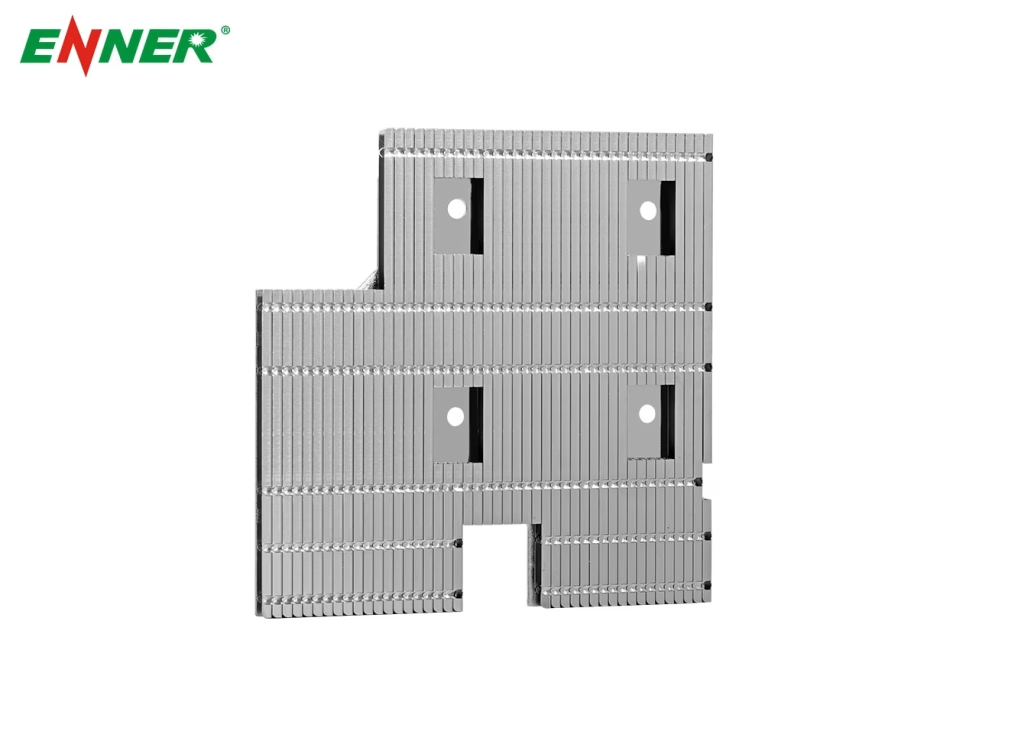
For concentrated hot spots exceeding 150W TDP Vapor chamber heat sinks act as two dimensional planar spreaders. High capacity Heat pipe cooling networks transport thermal loads across longer physical distances to remote secondary fin stacks. In forced air environments ultra thin Zipper fin heat sinks deliver exceptional cooling performance while maintaining excellent fin bending strength under fan pressure.
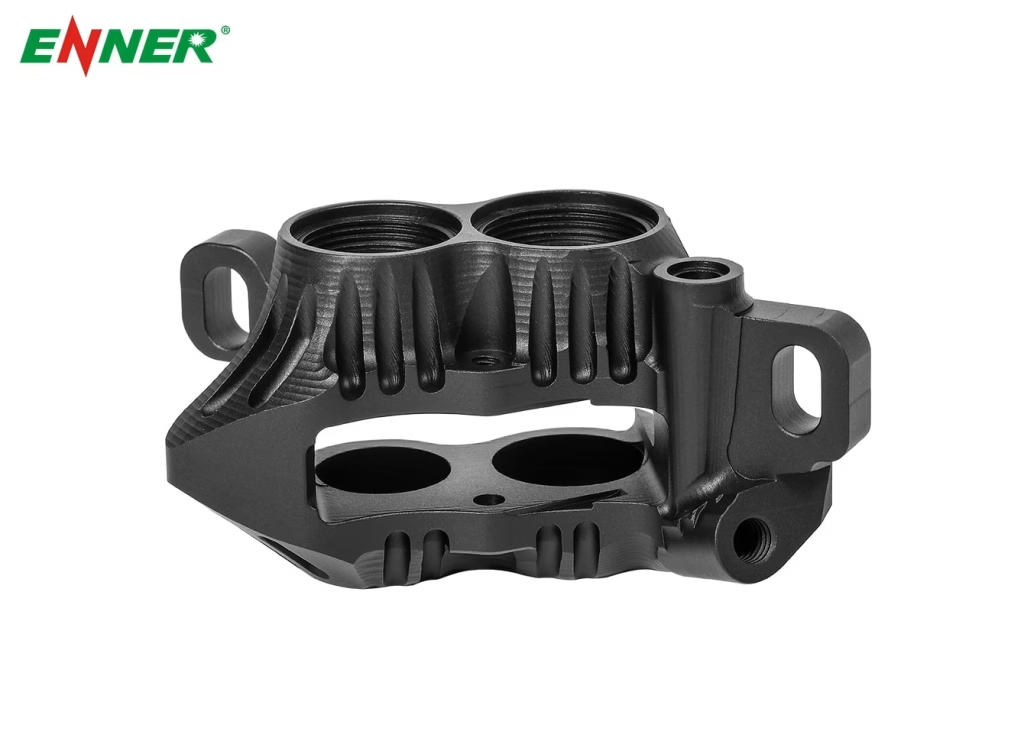
Precision CNC machined parts ensure bases meet strict flatness tolerances which minimizes Thermal Interface Resistance. Durable Stamped metal parts form structural clips while specialized mounting Accessories maintain uniform interface pressure across the component lifecycle.
Operating environments dictate specific material standards manufacturing certifications and physical layouts.
Automotive traction inverters require ruggedized cooling assemblies capable of withstanding sustained vibration. This sector demands strict compliance with IATF16949 quality management protocols to protect sensitive ADAS modules against extreme thermal shock.
Outdoor remote radio units operate in sealed IP67 enclosures relying heavily on passive skived aluminum arrays. This passive approach minimizes moving mechanical parts preventing field maintenance failures in isolated cell sites.
Variable frequency drives and switchgear experience sudden heavy electrical surges. Thermal spreaders in these environments must maintain structural integrity and consistent heat dissipation across decades of continuous factory operation.
Building a reliable supply chain requires a partner capable of executing closed loop validation from initial fluid dynamic modeling through to mass production.
To bridge the gap between CFD idealism and machined reality we offer a Thermal Simulation Alignment Checklist to help your team flag tolerance risks before prototyping. For immediate project validation request a comprehensive resistance test report tailored to your current enclosure.
Yes our engineering facility utilizes rapid prototyping and CNC machining to produce functional samples within one to two weeks. This allows your team to perform physical wind tunnel testing and validate actual pressure drops against theoretical CFD software models.
Vapor chambers excel at spreading heat across a two dimensional surface directly above high flux chips. Heat pipe networks are necessary when thermal energy must be transported across longer physical distances to remote fin arrays.
Computational fluid dynamics software including Flotherm ANSYS Icepak or SolidWorks Flow Simulation represent industry standards for modeling airflow velocity and junction temperatures before building physical test units.
Validating customized high-performance heat sinks requires balancing thermal resistance physical manufacturing limits and material integrity. By evaluating appropriate fin topologies validating CFD models through physical prototypes and addressing contact flatness early engineering teams can guarantee reliable continuous component cooling.
Download our thermal simulation alignment checklist or request a comprehensive thermal resistance test report for your current enclosure. Contact the engineering team at Enner Group today to accelerate your prototyping cycle and secure reliable mass manufacturing support.