



















Newer
CNC Metal Milling: A Guide to Precision Parts Manufacturing
Modern high performance GPUs generate concentrated heat loads that require efficient thermal spreading. A GPU vapor chamber uses phase change heat transfer to distribute heat from a localized source across a larger cooling surface.
When integrated into a finned heat sink, the vapor chamber can improve heat spreading and help use the available fin area more effectively.
This architecture is particularly relevant to high performance computing systems, gaming hardware, data centers, and other applications with demanding thermal requirements.
A planar vapor chamber distributes thermal energy across a wider base area rather than relying on heat movement along a single linear path. This two phase heat transfer approach helps spread concentrated heat from the GPU across a larger portion of the cooling structure. The broader thermal distribution can make more of the attached fin area available for heat dissipation.
The interface between the GPU heat source and the vapor chamber affects the overall thermal path. A flat and properly matched contact surface helps reduce unnecessary thermal resistance between the heat source and cooling base.
Engineers should consider surface flatness, interface material, contact pressure, and base geometry when designing a GPU cooling assembly.
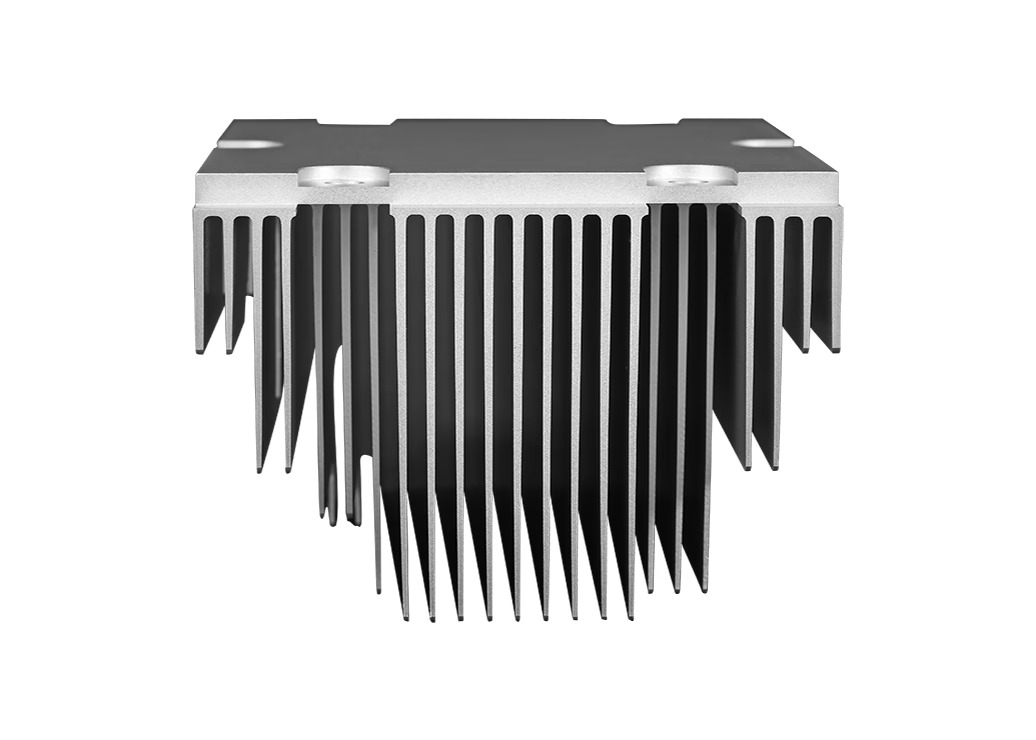
A vapor chamber can be integrated into the base of a finned heat sink to distribute heat from the localized source across the fin structure. This configuration helps distribute heat across the fin structure and makes more of the available fin area effective for heat dissipation.
Enner’s Vapor Chamber Heatsinks are designed for high performance electronic applications where effective heat spreading is required.
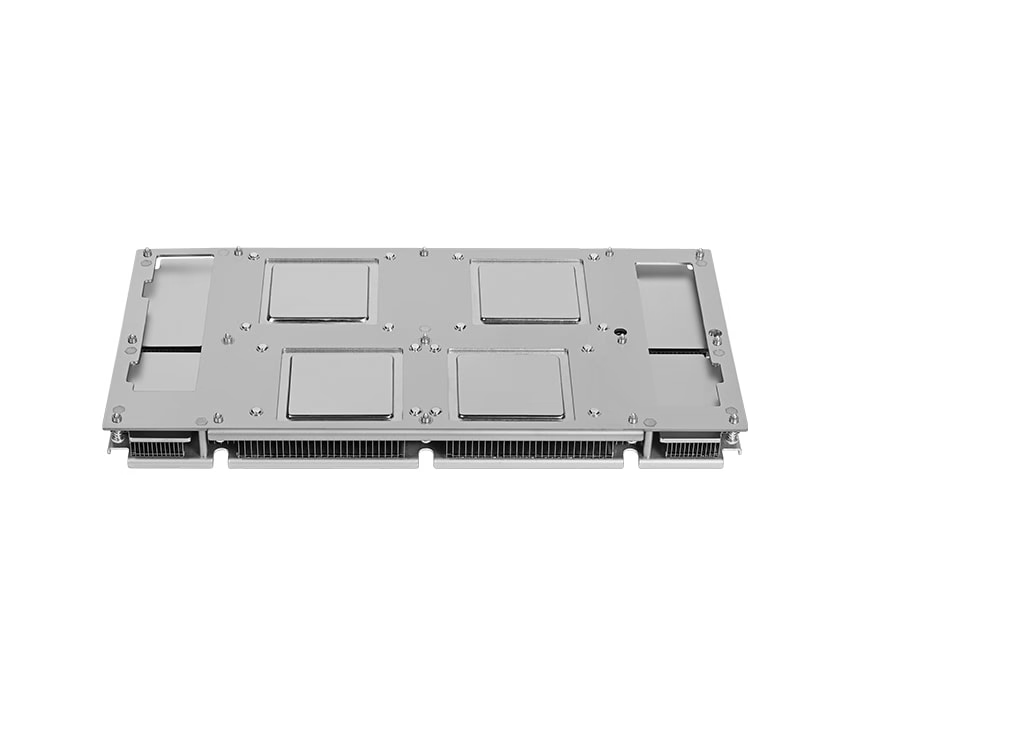
Heat generated by the GPU enters the evaporator region of the vapor chamber through the thermal interface and copper base. The working fluid absorbs this thermal energy and undergoes a phase change from liquid to vapor.
This process allows the chamber to transport heat away from the localized source without depending solely on solid metal conduction.
The vapor moves from the heated evaporator region toward cooler areas within the sealed chamber. The internal pressure and chamber geometry influence the phase change process and vapor movement.
Proper internal design helps distribute thermal energy across the chamber rather than allowing it to remain concentrated near the original heat source.
When vapor reaches a cooler section of the chamber, it condenses and releases latent heat. The resulting liquid is then returned toward the evaporator through the internal wick structure.
This continuous evaporation and condensation cycle allows the vapor chamber to transfer heat from the GPU contact area toward the larger cooling structure.
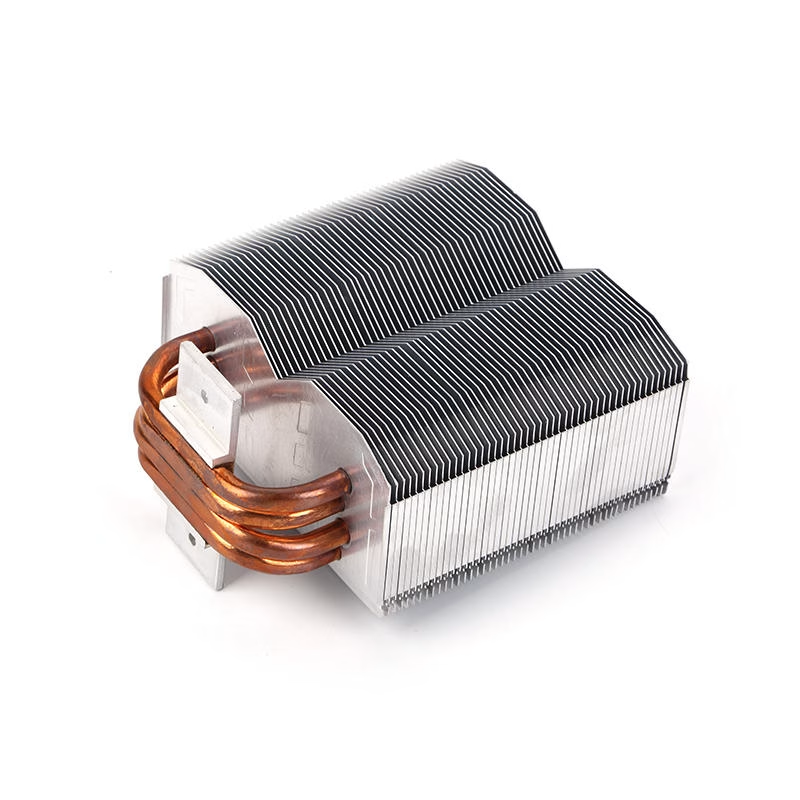
A similar phase change principle is also used in Heatpipe Cooling, which is commonly used for board level devices and components.
The vapor chamber should match the GPU heat source and available heatsink footprint. An appropriately sized chamber provides sufficient area for heat spreading while maintaining compatibility with the surrounding mechanical structure.
Chamber dimensions should therefore be evaluated together with the GPU package, fin stack, mounting system, and available installation space.
The wick structure controls the return of condensed working fluid toward the evaporator. Its geometry and capillary characteristics affect fluid circulation inside the chamber.
Engineers should evaluate wick configuration according to heat load, chamber dimensions, orientation requirements, and intended operating conditions.
Copper provides both thermal conductivity and structural support for the vapor chamber. Base thickness affects the mechanical characteristics of the assembly as well as the thermal path between the heat source and internal chamber.
The appropriate thickness depends on the required strength, thermal design, mounting conditions, and overall package dimensions.
Fin geometry determines how effectively the heat transferred from the vapor chamber can be released into the surrounding air.
Fin density, thickness, height, spacing, and airflow conditions should be evaluated together. Integrating the vapor chamber with the fin stack helps distribute heat across a larger surface area.
Planar phase change heat spreading allows a vapor chamber to distribute concentrated heat across a larger cooling base. This approach is well suited to GPUs and other high performance components where heat is concentrated within a relatively small area.
Heat pipes transfer thermal energy through phase change inside enclosed tubes. This approach is suitable when heat needs to move from a localized source to a separate cooling area. Compared with a vapor chamber, heat pipes provide a linear heat transfer path rather than planar heat spreading.
Extrusion heatsinks rely primarily on solid metal conduction followed by heat dissipation through an array of fins. They offer a practical approach for applications where the thermal load, available space, and production requirements are compatible with an extruded aluminum profile.
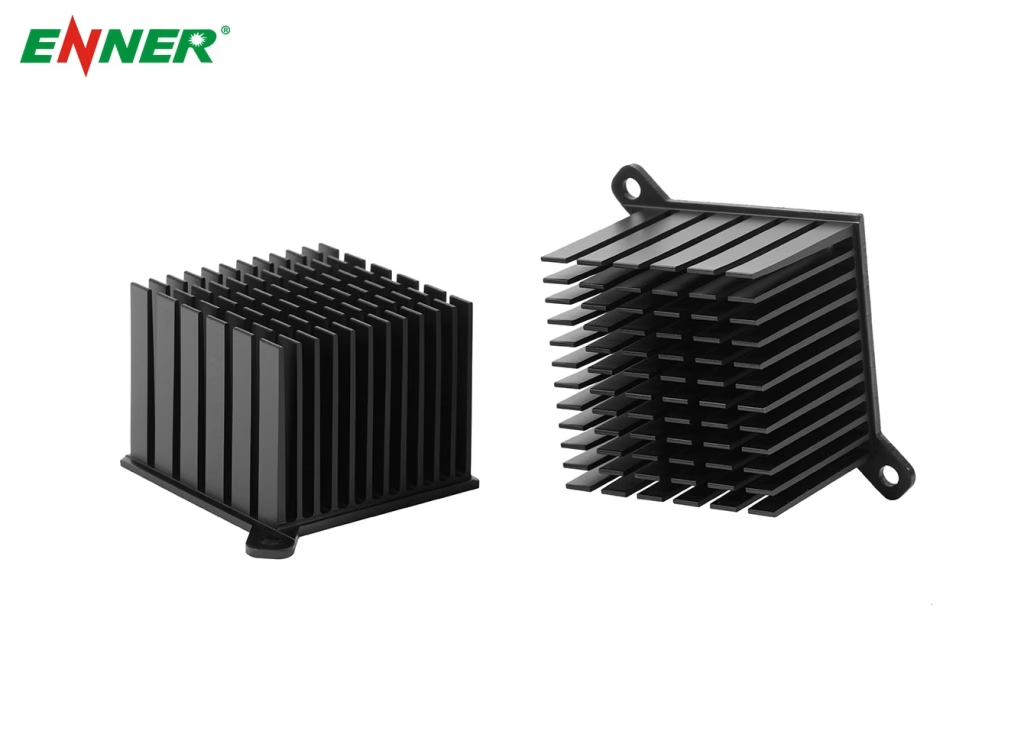
For applications requiring standard or custom extrusion profiles, Extrusion Heat Sinks are another option to consider.
| Thermal Technology | Heat Transfer Approach | Typical Application Focus |
| Vapor Chamber Heatsinks | Planar phase change heat spreading | High performance CPUs, GPUs, data centers, gaming systems |
| Heatpipe Cooling | Phase change heat transfer through heat pipes | Board level devices and components |
| Extrusion Heat Sinks | Conduction through extruded aluminum fins | General electronic cooling |
Copper material selection affects thermal conductivity, mechanical properties, chamber dimensions, and manufacturing cost.
Engineers should evaluate copper grade, thickness, overall chamber dimensions, and required production specifications.
The internal wick is an important part of the vapor chamber because it supports condensed liquid return to the evaporator.
More complex wick structures can require additional manufacturing processes and tighter process control. The required wick design should therefore be matched to the thermal load and chamber geometry.
Controlled sealing and quality verification are important because the chamber depends on a sealed internal environment for two phase heat transfer.
hamber construction, sealing requirements, verification testing, and process consistency can all influence manufacturing complexity and cost.
Production volume affects tooling, setup, process optimization, and unit economics. Prototype quantities may require different manufacturing considerations from large scale OEM production.
Engineers should evaluate expected annual volume together with design complexity when comparing suppliers.
Thermal simulation helps engineers evaluate heat distribution, airflow, and cooling geometry before physical production.
Using numerical and analytical data helps identify potential design issues and evaluate cooling solutions early in development.
Physical prototypes allow engineers to validate thermal performance against the actual GPU package, heatsink geometry, thermal interface, and operating conditions. Sample development is particularly important when the vapor chamber must fit a custom mechanical envelope.
Material verification helps ensure that the selected copper and other construction materials meet the required specifications.
This becomes increasingly important for custom vapor chamber designs where thermal performance and mechanical requirements must be controlled together.
For larger thermal management assemblies, supplier capabilities should extend beyond individual components.
Integrated assembly services are valuable when the vapor chamber and heatsink need to be combined into a finished cooling assembly.
A GPU vapor chamber is a flat, sealed thermal management device that uses a two phase heat transfer cycle to spread concentrated heat across a larger surface area. Heat causes the working fluid to vaporize in the evaporator region, while condensation occurs in cooler areas of the chamber. The resulting cycle helps distribute heat away from the GPU heat source.
The main cost factors include copper material specifications, chamber dimensions, internal wick complexity, sealing requirements, manufacturing complexity, and total production volume. Custom designs should be evaluated according to the required thermal performance and production requirements.
A properly controlled contact surface helps reduce thermal resistance between the heat source, thermal interface material, and vapor chamber base. Poor contact can create additional thermal resistance and reduce heat transfer efficiency.
The thermal interface material should match the GPU package, contact surfaces, mounting pressure, and required thermal performance. A thin and uniform interface layer can help minimize unnecessary thermal resistance between the heat source and cooling base.
GPU vapor chambers help spread concentrated heat across a larger cooling surface through two phase heat transfer. Performance depends on chamber design, wick structure, copper construction, thermal interface, fin geometry, and airflow.
For custom GPU cooling projects, Contact Enner to discuss your thermal requirements and find a suitable vapor chamber solution.