


















Newer
GPU Vapor Chamber Design and Thermal Performance Guide
Choosing the right heatsink manufacturer requires more than comparing product prices. Procurement engineers should evaluate thermal engineering capabilities, manufacturing processes, material options, quality control, and custom design support.
The right supplier should be able to support a project from design review and tooling through production, finishing, inspection, and delivery.
Thermal simulation and design for manufacturability reviews can identify potential problems before production begins.
A capable manufacturer should evaluate the heatsink structure against thermal and manufacturing requirements and recommend changes to fin geometry, base dimensions, mounting features, or other details.
Early design review can reduce tooling changes and help ensure that the proposed structure is practical to manufacture.
Custom heatsink projects often require more than modifying a standard profile. Heat load, installation space, airflow, mounting requirements, material selection, and secondary machining can all affect the final design.
The manufacturer should be able to review these requirements together and develop a heatsink that meets both thermal and mechanical constraints. This is particularly important for applications with limited installation space or unusual mounting requirements.
Production capability should match engineering expertise. Procurement teams should review tooling resources, production equipment, inspection procedures, finishing options, and assembly capabilities.
A supplier with multiple heatsink manufacturing processes can also provide more flexibility when the initial cooling concept needs to change. Extrusion, skiving, heatpipes, vapor chambers, and secondary machining may each suit different thermal requirements.
Moving from supplier qualifications to manufacturing methods, the next step is to determine which heatsink process matches the application.
Extrusion is suitable for repeatable profiles, scalable production, and flexible cross sectional designs. Engineers can adjust fin height, thickness, spacing, and base geometry according to available space and cooling requirements.
Enner offers Extrusion Heat Sinks for standard and customized cooling applications, with a portfolio covering more than 6,000 tooled extrusion shapes.

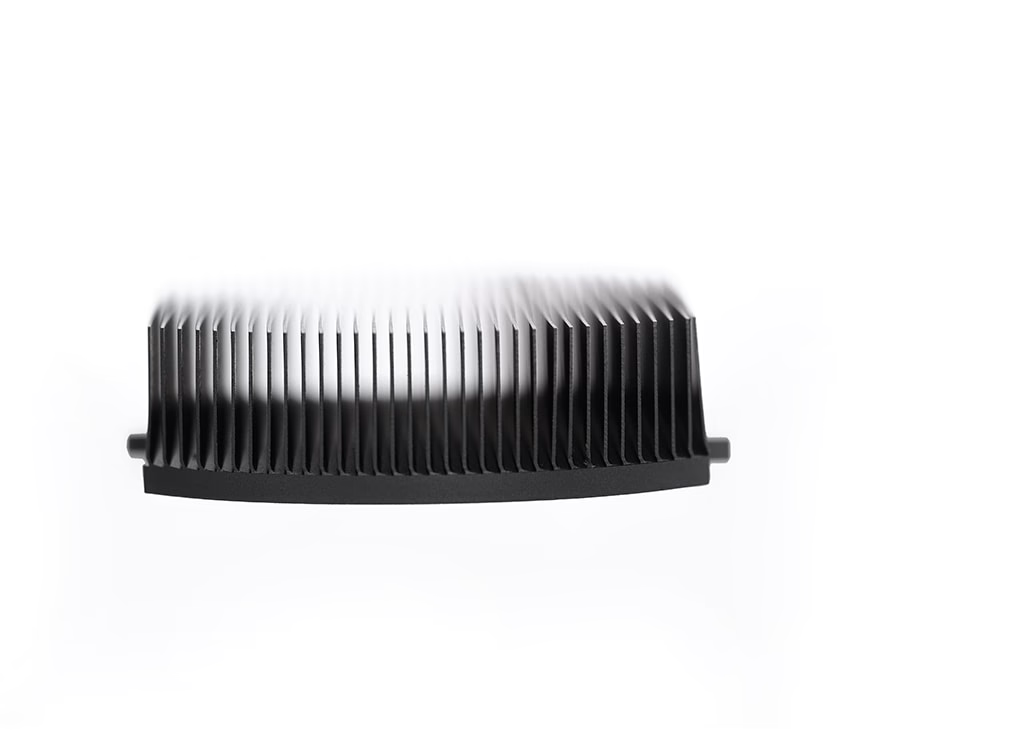
Skived Heat Sinks are useful when high fin density is required within a limited footprint. The fins are formed directly from the metal base, allowing thinner fins and higher aspect ratios than conventional extrusion in many applications.
Skiving can produce fine fin structures for compact cooling assemblies where available space limits the overall heatsink size. It is particularly useful when engineers need to increase surface area without significantly increasing the base footprint.
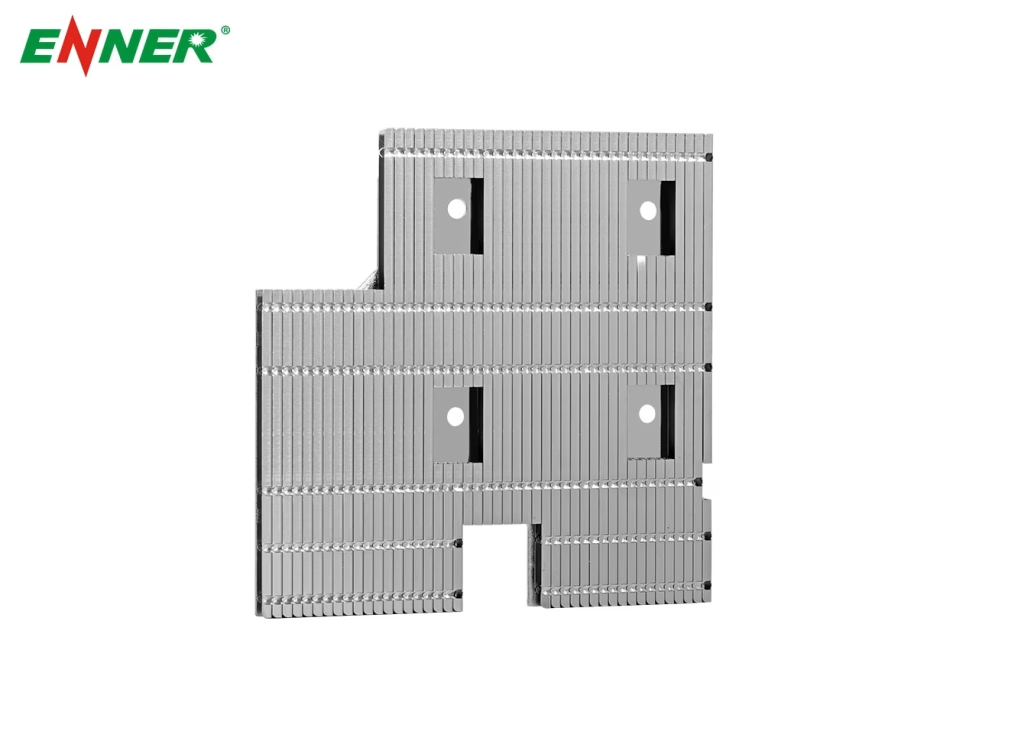
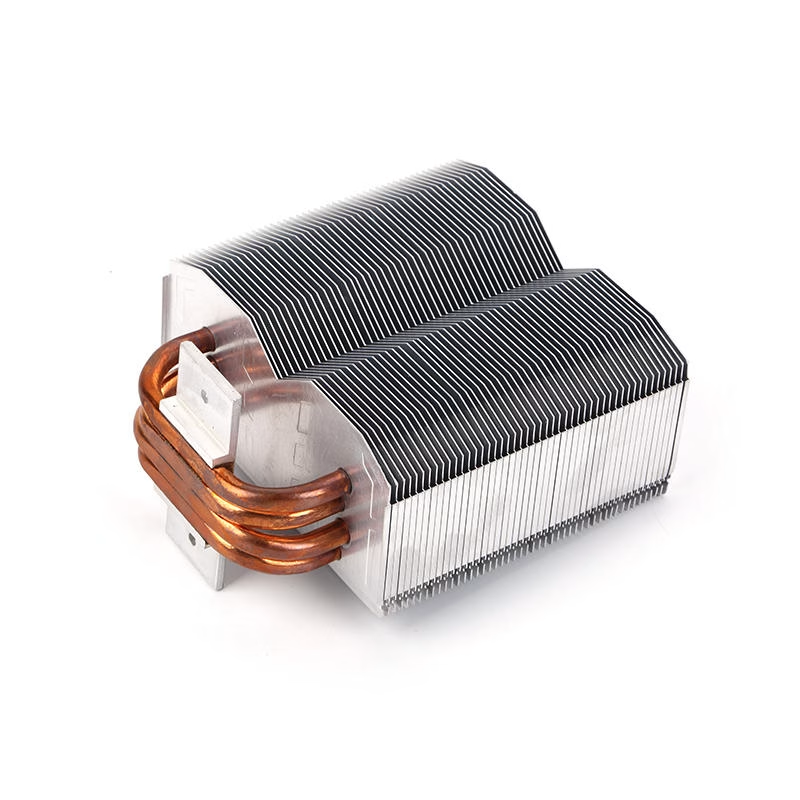
Heatpipes and vapor chambers help transfer heat away from concentrated heat sources when conventional fin structures are insufficient.
Enner provides Heatpipe Cooling for board level devices and components where efficient heat distribution is required.
These solutions are commonly considered for CPUs, GPUs, servers, data centers, and other high performance electronics with limited space or high heat density.Thermal design should also consider material selection and surface treatment.
Material and surface treatment affect thermal behavior, mechanical properties, corrosion resistance, and manufacturing requirements.
The specification should therefore match the complete application rather than focusing only on thermal conductivity.
Aluminum remains a common choice for heatsinks because it offers low weight, good thermal conductivity, and excellent extrusion performance.
6063 aluminum is well suited to heatsink profiles because it can form complex fin structures while providing good thermal performance. 6061 aluminum offers greater mechanical strength, making it a better option when the heatsink also needs to meet higher structural or mounting requirements.
Surface treatment should match the operating environment and functional requirements. Anodizing can provide surface protection while also affecting the appearance and emissivity of the heatsink.
Powder coating is another option for applications with specific appearance or environmental requirements. Procurement teams should confirm the required finish together with mounting dimensions, operating conditions, appearance requirements, and production volume.
A manufacturer’s production capability determines whether an approved design can be converted into consistent volume production.
Procurement teams should review tooling, machining, surface treatment, inspection, and assembly capabilities before placing an order.
Custom extrusion tooling affects the feasibility and cost of a new heatsink profile. The manufacturer should review the proposed cross section and identify difficult geometries before tooling begins.
Fin thickness, spacing, height, base thickness, and mounting features can all influence extrusion feasibility. Early tooling review can help reduce design changes after production starts.
Many extruded heatsinks require additional machining for mounting holes, cutouts, threaded features, or interface surfaces.
A manufacturer with secondary CNC machining capability can coordinate these features with the original profile design. This can simplify production management and reduce the need to transfer components between separate suppliers.
Surface finishing and assembly should also be included in the supplier evaluation.
Anodizing and powder coating may be selected according to environmental and appearance requirements, while assembly services can help consolidate multiple production steps. Procurement teams should confirm whether these processes are handled internally or through qualified production partners.
Before finalizing a partnership, procurement teams should verify operational lead times and sample availability.
Production lead time depends on the profile, tooling status, order quantity, machining requirements, and surface treatment. For reference, Enner states that mill finish production orders generally require about 7 to 10 days, while powder coated or anodized orders generally require about 15 to 20 days.
Actual timing should be confirmed for each project before an order is placed.
Samples allow engineers to verify dimensions, material, fin structure, mounting features, and surface finish before volume production.
A supplier should provide a clear sample process and confirm whether the sample represents the final production configuration. Enner lists a sample lead time of approximately 2 to 3 days.
A fast quotation is useful, but response speed should not replace technical review.
The supplier should evaluate drawings, materials, profile geometry, finishing requirements, production volume, and other specifications before providing a quotation. This gives procurement teams a clearer understanding of both the expected cost and manufacturing requirements.
Heatsink cost mainly depends on material, profile size, extrusion complexity, tooling, production volume, machining, and surface treatment. Complete drawings and production requirements help suppliers prepare a more accurate quotation.
Custom heatsink production time depends on tooling, quantity, machining, and finishing requirements. Production lead times should be confirmed after the supplier reviews the complete project specifications.
Yes. Depending on the application, a manufacturer may provide extrusion, skived heatsinks, heatpipe cooling, vapor chamber solutions, CNC machining, and other secondary processes.
Choosing the right heatsink manufacturer requires more than comparing thermal performance or unit price. Procurement teams should consider engineering support, manufacturing processes, material selection, machining capabilities, surface treatment, quality control, and delivery capacity.
The right supplier should be able to evaluate your requirements from the initial design stage and provide a practical path from prototype development for volume production.
If you are evaluating a custom heatsink project or need support with material, profile, or cooling design selection, contact our team to discuss your requirements and determine a suitable manufacturing solution.