



















Newer
Understanding and Addressing Stamping Springback: Challenges and Solutions
With the rapid development of electronic devices at high frequencies and speeds, as well as the continuous progress of integrated circuit technology, the power density of electronic components has been constantly increasing, while the physical size of the equipment has been gradually shrinking. This trend has led to more and more severe high-temperature problems during equipment operation, posing threats to performance and service life. Therefore, researching and applying efficient heat dissipation methods has become an important task in the current electronics industry.
This article will analyze six common heat dissipation methods for electronic components with practical cases and provide optimization suggestions to help enterprises and R & D personnel choose suitable heat dissipation solutions.
The impact of heat accumulation on electronic components is significant, mainly manifested in the following aspects:
Performance Degradation : An increase in temperature will reduce the electron mobility of semiconductor devices, thereby affecting the computing speed and accuracy.
Service Life Shortening : Long-term operation at high temperatures will accelerate the aging of component materials, leading to an increased risk of failure.
Equipment Failure : In severe cases, thermal runaway will be triggered, resulting in permanent hardware damage.
Therefore, ensuring the timely discharge of heat is the key to ensuring the normal operation of electronic equipment.
Natural Heat Dissipation
Natural heat dissipation is the most basic and lowest-cost heat dissipation method, mainly expelling heat through conduction, natural convection, and radiation.
Application Scenarios : Low-power consumption devices or scenarios with relatively low temperature control requirements, such as small household appliances and embedded devices.
Optimization Measures : Reasonably design the equipment structure to increase the surface area in contact with the air, such as using aluminum heat sinks or thermally conductive plastics.
Advantages : No noise, low energy consumption.
Disadvantages : Low heat dissipation efficiency, not suitable for high power density devices.
Forced Heat Dissipation
Forced heat dissipation uses devices such as fans to accelerate the flow of air to take away heat and is currently the most widely used heat dissipation method.
Technical Characteristics : Increase the heat conduction efficiency by increasing the fin area of the radiator or introducing a spoiler design.
Application Scenarios : Medium-power devices such as computer motherboards, power modules, and automotive electronic devices.
Advantages : Efficient heat dissipation, easy to deploy.
Disadvantages : Requires power supply support, may generate noise and additional maintenance costs.
Liquid Cooling
Liquid cooling is an efficient heat dissipation method in which a liquid coolant absorbs heat and uses a liquid cycle to carry the heat away from the heat source.
Direct Cooling : The liquid directly contacts the components and cools by absorbing heat.
Indirect Cooling : The liquid exchanges heat indirectly with the heat source through cooling pipes.
Application Scenarios : High-density data centers, supercomputing servers, LED lights, and high-power lasers.
Advantages : High heat dissipation efficiency, capable of handling high power density.
Disadvantages : Complex system, relatively high cost.
Refrigeration Heat Dissipation
Refrigeration heat dissipation technology includes phase change cooling and Peltier refrigeration, which are specifically used for scenarios with extremely high heat dissipation requirements or special temperature control needs.
Phase Change Cooling : The refrigerant absorbs heat and cools down during the phase change process.
Peltier Refrigeration
Achieves thermoelectric refrigeration through the Peltier effect of semiconductor materials.
Application Scenarios : Deep cold environments, precision instruments, and portable medical devices.
Advantages : Excellent refrigeration effect, strong adaptability.
Disadvantages : High cost, relatively low efficiency.
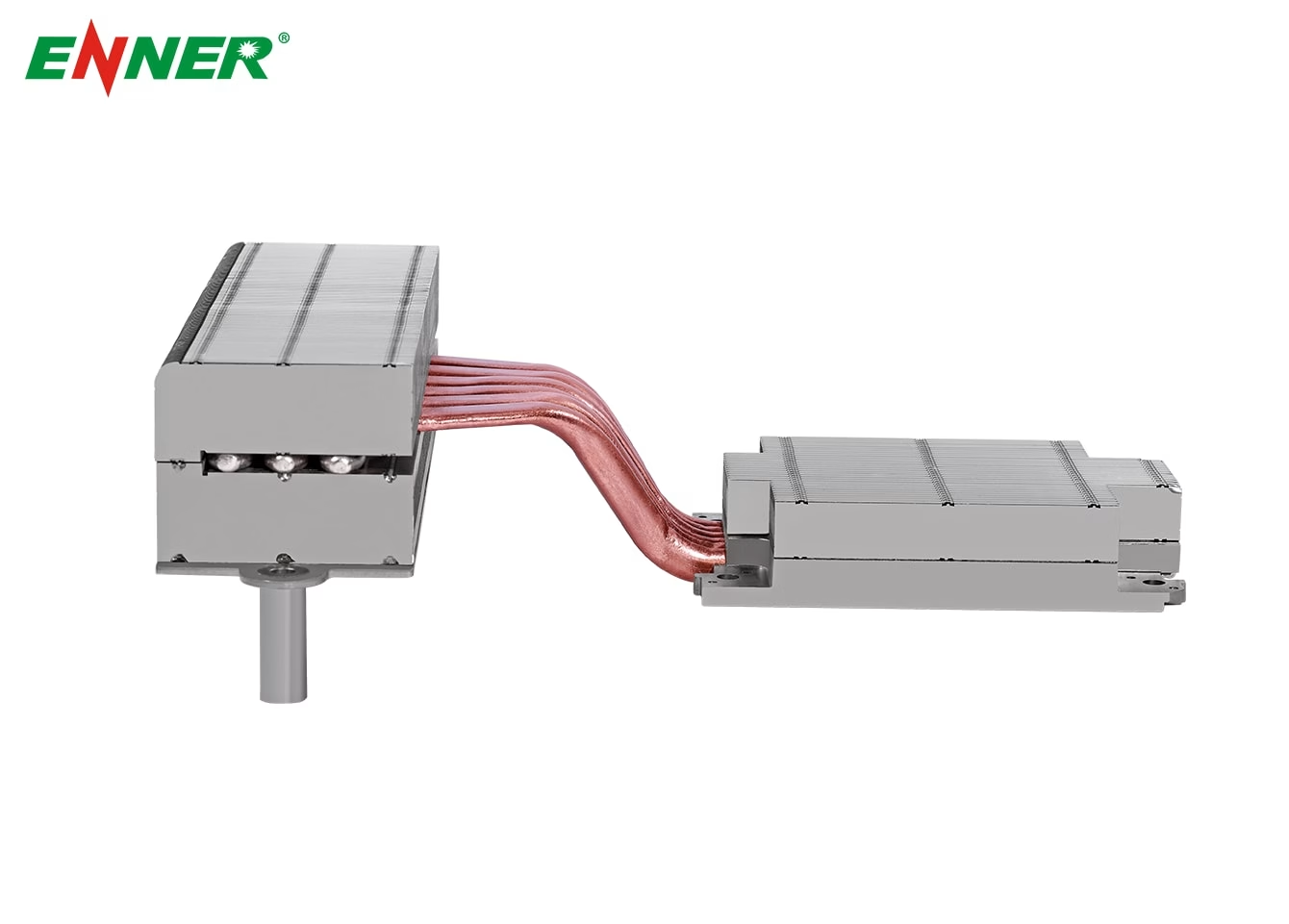
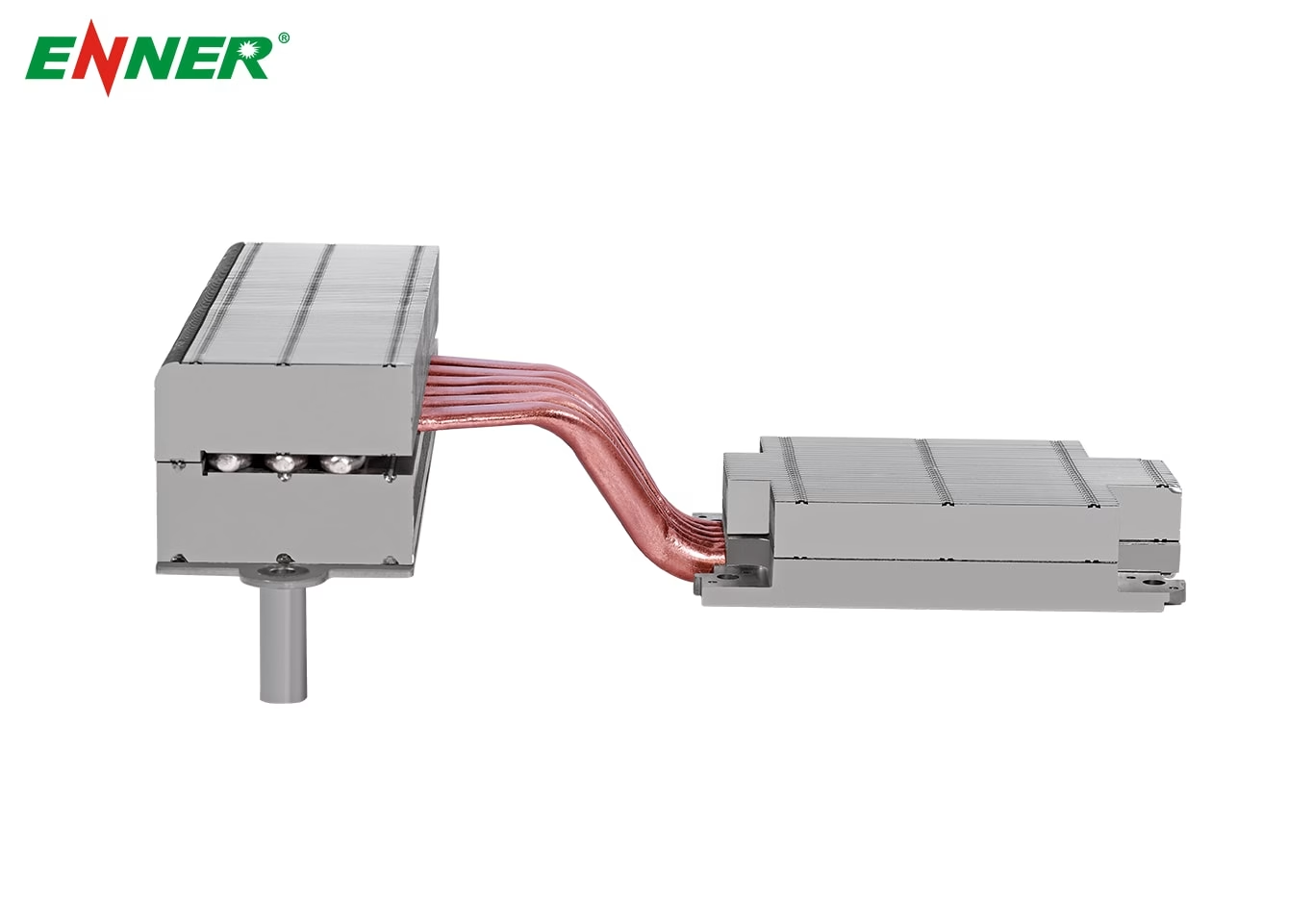
A heat pipe is an efficient heat transfer device that uses the phase change of the working medium to quickly transfer heat to the cold source.
Technical Advantages : It has extremely high thermal conductivity, which is hundreds of times that of copper.
Application Scenarios : Laptop processor heat dissipation, electric vehicle battery management systems, etc.
Advantages : High reliability, suitable for compact spaces.
Disadvantages : There is a heat transfer limit and requires precise design.
The application of advanced thermally conductive materials is one of the future development directions of heat dissipation technology, such as graphene films, thermal conductive adhesives, and phase change materials.
Graphene : With an extremely high thermal conductivity coefficient, it is suitable for heat dissipation of high-heat devices.
Phase Change Materials : Absorb heat through solid-liquid phase change and are suitable for temporary high-heat scenarios.
Advantages : Improve heat dissipation efficiency and are suitable for multiple devices.
Disadvantages : Relatively high cost, high technical threshold.
In practical applications, choosing a suitable heat dissipation method requires comprehensive consideration of the following factors:
Power Density
The higher the power, the more efficient the heat dissipation method required, such as liquid cooling or heat pipe heat dissipation.
Equipment Space
For compact equipment, heat pipe or Peltier refrigeration solutions should be given priority.
Budget and Cost
Natural heat dissipation and forced heat dissipation have high cost performance and are suitable for small and medium-power devices.
To improve heat dissipation efficiency, you can take the following measures:
Design Optimization
Increase the fin area of the radiator.
Adopt a streamlined design to reduce wind resistance.
Material Selection
Apply thermal conductive paste between the heat source and the heat dissipation device to improve the contact thermal resistance efficiency.
Use aluminum alloy, copper, or graphene materials with excellent thermal conductivity.
Monitoring and Maintenance
Regularly clean the dust on fans and radiators.
Install temperature sensors to monitor the equipment temperature in real time.
Efficient heat dissipation of electronic components is not only a technical challenge but also a core task to ensure the performance and service life of equipment. Choosing a suitable heat dissipation method requires comprehensive consideration of power density, equipment space, and cost budget. With the continuous development of technology, we look forward to seeing more efficient and intelligent heat dissipation solutions emerging, injecting new vitality into the electronics industry.
If you’re looking for an efficient and reliable cooling solution, look no further than Enner! As a leading brand in the field of cooling, we manufacture Extrusion Heat sinks, Heatpipe Cooling, Vapor Chamber Heatsinks , Skived Heat Sinks and more. We have the cutting-edge technology and experience to customize an efficient cooling solution for you, whether it’s a small electronic device or a high power density system. Whether you have small electronic devices or high power density systems, Ennerhe can customize an efficient cooling solution for you.
Contact us to explore the possibilities of cooling technology! Visit our website at Enner or call our customer service hotline : 0086-0755-2811 7172 to talk to our team about making your electronic components last longer!