



















​뉴스

냉각 방열판 가이드: 원리, 종류 및 선택

iwonder님이 게시함

Cooling heat sinks are the backbone of modern electronic thermal management. By efficiently absorbing and dissipating heat away from high-power components, they prevent thermal throttling and critical hardware failure. This guide breaks down how heat sinks work, how they are manufactured, and how to select the right system for your applications.

How Cooling Heat Sinks Work

A cooling heat sink operates on a fundamental thermodynamic principle: heat naturally flows from a high-temperature region to a lower-temperature region.

To achieve low junction temperatures, heat undergoes a three-stage thermal dissipation process:

  • 전도: Heat generated by the component passes directly through the thermal interface into the flat base plate of the heat sink.
  • 확산 : Thermal energy spreads laterally across the base plate and travels upward into the fin structure.
  • 대류 및 복사: Air or liquid moving across the surface area carries heat away into the surrounding environment.

Having covered the basic operational principles, let’s now examine the primary types of heat sink configurations available today.

Primary Types of Cooling Heat Sinks

Heat sinks are classified primarily by their operational mechanism and fluid dynamics:

  • 패시브 방열판: Rely entirely on natural air convection and radiation. They feature no moving parts, making them noiseless, highly reliable, and energy-free. However, their cooling capacity is limited by ambient airflow.
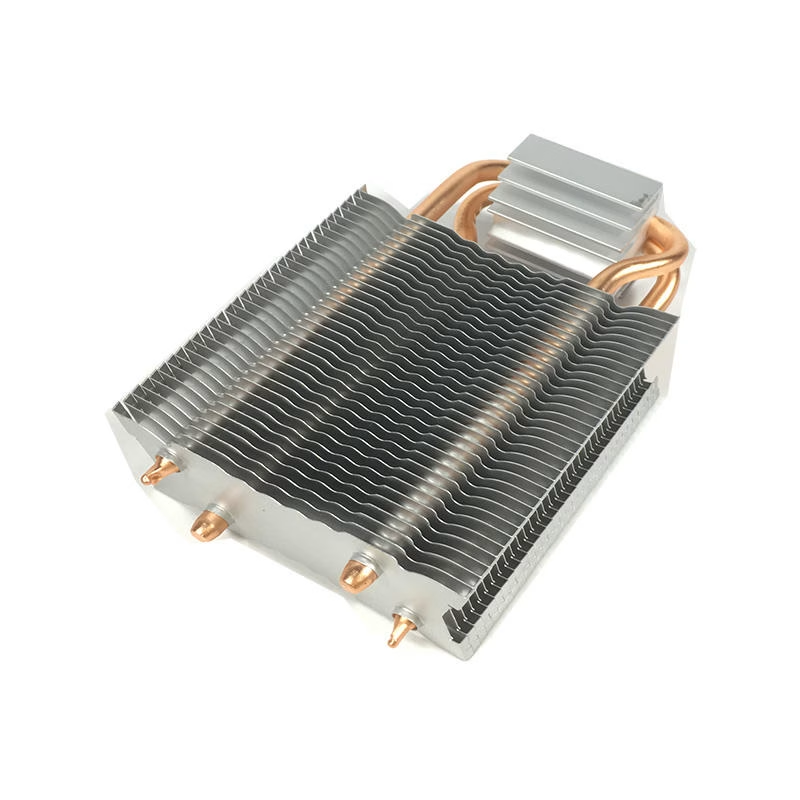
  • 활성 방열판: Combine a physical heat exchanger with forced-air blowers or fans. Forced convection drastically boosts the heat transfer coefficient, making active cooling essential for high-power processors.
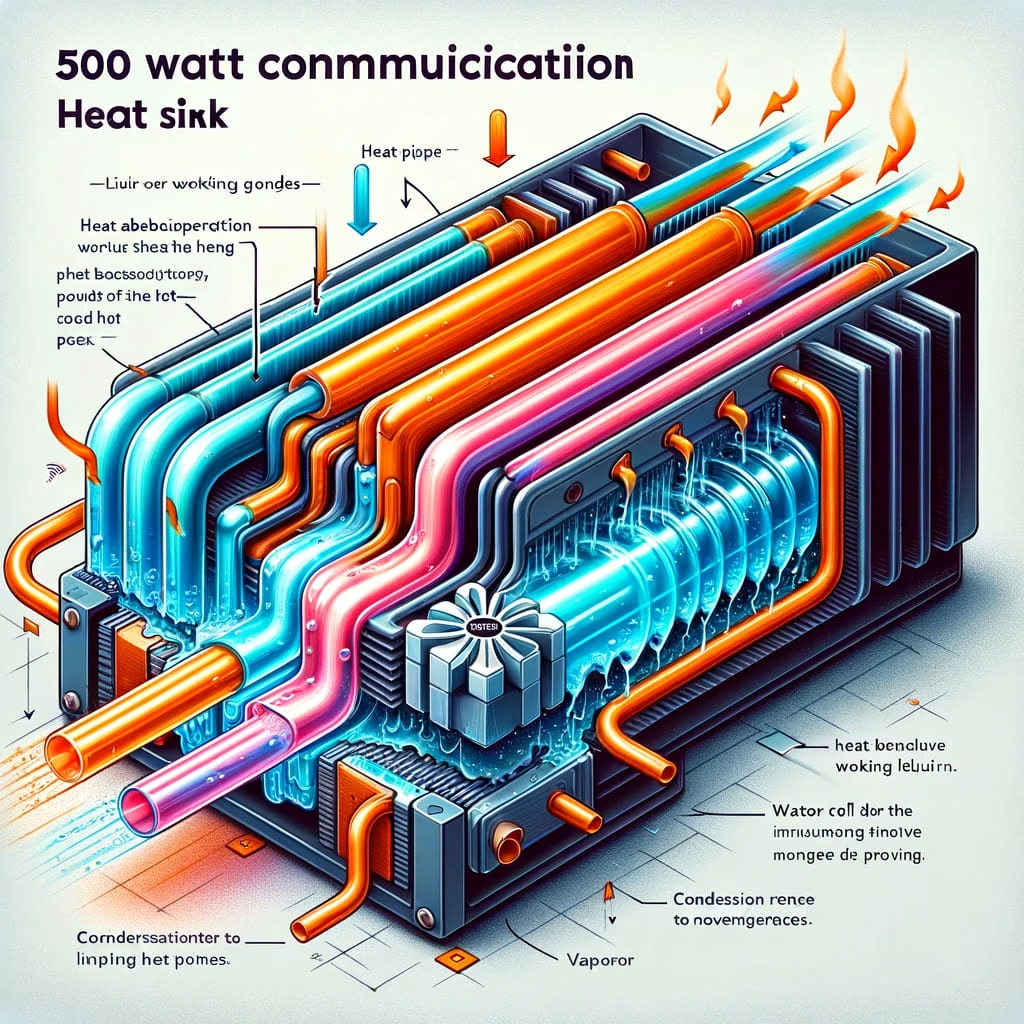
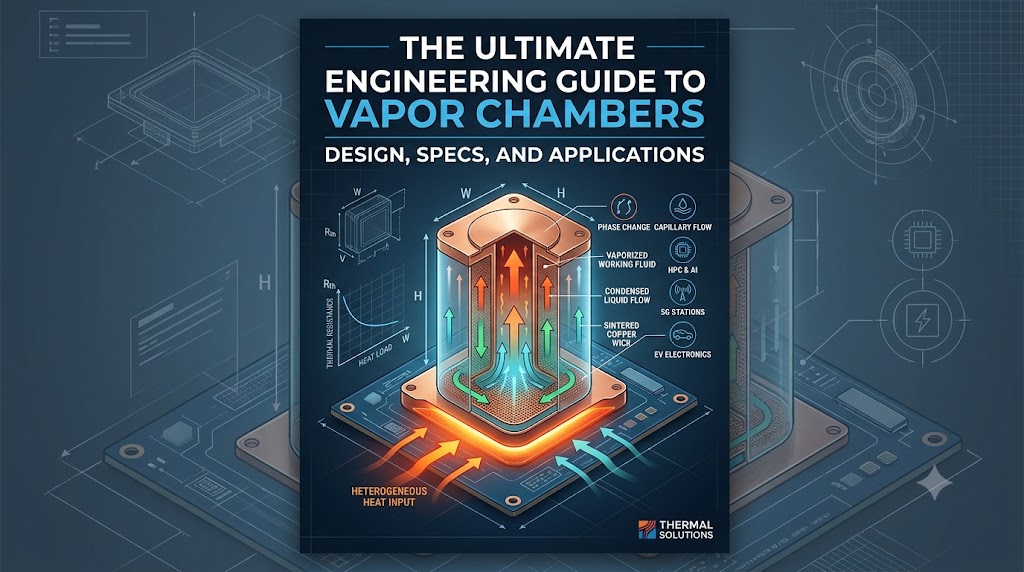
  • Hybrid & Liquid Cooling Systems: Integrate advanced two-phase heat transfer elements—such as liquid cold plates, vapor chambers, or heat pipes—directly into the fin array for extreme thermal loads.

With the primary categories established, the next critical step is understanding how material choice and manufacturing methods impact thermal performance.

Materials & Manufacturing Methods

Material selection and manufacturing techniques directly affect thermal conductivity, structural integrity, weight, and production costs.

메트릭 알루미늄 합금(예: 6063) 순수한 구리
열 전도성 ~200W/m·K ~400W/m·K
밀도 및 무게 가벼운 무게(~2.7g/cm³) 무겁다(~8.9 g/cm³)
제조 역량 Highly extrudable into complex profiles Ideal for skived fins and high-conduction plates
비용 및 다용성 대량 생산, 비용 효율적 Premium performance for high-density heat

압출 제조

Pushing heated metal through a shaped die creates continuous profiles with long, straight fins. For cost-effective and versatile structural designs, engineering teams often choose extruded profiles for high-volume production.

Skiving Processes

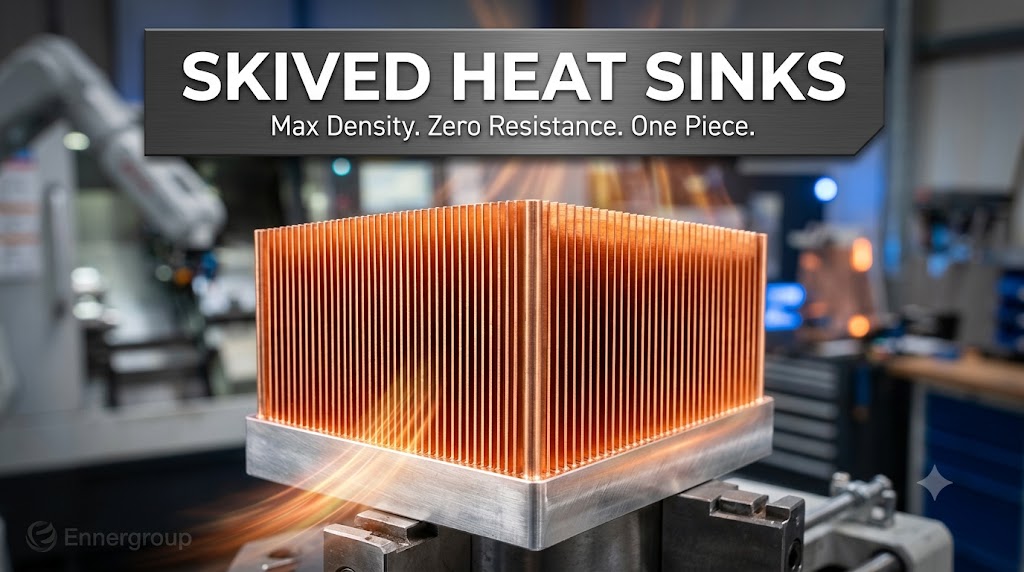
A single block of metal is sliced into ultra-thin, densely packed fins, eliminating thermal resistance at the base-to-fin junction.

Die-Casting & Stamping

Ideal for complex 3D shapes or thin sheet-metal configurations used in board-level cooling.

Zipper & Bonded Fins

Assembled configurations that allow high fin density and hybrid material combinations for large-scale industrial heat exchangers.

Having thoroughly explored conventional solid-metal manufacturing, let’s now look into how modern engineering overcomes traditional conductive limits over long distances. Leading thermal solutions providers like 에너그룹 specialize in developing standard and custom heat pipe architectures to address these extreme thermal fluxes. To learn more about specialized high-performance cooling systems, you can explore their specialized 히트파이프 냉각 솔루션을 제공합니다.

Performance Factors for Heat Sink Design

Designing an effective cooling solution requires balancing several thermal and mechanical parameters:

  • 열 저항 : Measured in °C/W, this metric represents the temperature rise per watt of dissipated power. Lower values indicate better performance.
  • Surface Area & Fin Geometry: Straight, pin-fin, flared, and cross-cut configurations dictate boundary layer behavior and exposed surface area.
  • Airflow Velocity & Pressure Drop: Increasing fin density boosts surface area but restricts airflow, requiring higher static pressure from fans.
  • Base Plate Flatness: Microscopic surface gaps create thermal resistance. The base plate must be flat and smooth to maintain direct contact with the component.

Even the flattest metal surfaces harbor microscopic surface imperfections. To bridge these gaps, thermal interface materials are required.

애플리케이션 환경

Different industries deploy tailored heat sink profiles based on spatial, thermal, and environmental conditions:

  • Computing & Consumer Electronics: Uses high-density skived copper heat sinks, heat pipe tower coolers, and aluminum spreaders for CPUs, GPUs, and NVMe SSDs.
  • Power Electronics & Telecommunications: Utilizes heavy-duty extruded aluminum profiles and liquid-cooled cold plates for IGBT modules, inverter drives, and outdoor base stations.
  • Optoelectronics & Automotive: Employs high-surface-area aluminum heat sinks for LED arrays, motor controllers, and EV battery thermal management modules.

자주 묻는 질문

What are the advantages of heat pipes over solid metal heat sinks?

Heat pipes offer much higher effective thermal conductivity than solid aluminum or copper. They move heat over greater distances with minimal temperature loss, spreading thermal loads evenly across large fin arrays.

What applications use heat pipe heat sinks?

They are standard in high-performance computing, telecommunications, power electronics, aerospace systems, medical devices, LED lighting, and EV thermal management.

What materials are typically used in heat pipe assemblies?

High-purity copper tubes with sintered copper wicks are standard. These are usually paired with aluminum or copper fin stacks and base plates to optimize weight and thermal performance.

How do I select the right heat sink for my device?

Determine your total power dissipation , maximum allowable junction temperature , available airflow, spatial footprint, and mounting orientation.

맺음말

Effective thermal management requires balancing thermal efficiency, mechanical dimensions, weight, and manufacturing costs. Whether you need standard extruded aluminum profiles or advanced two-phase heat pipe technology for dense heat loads, choosing the right configuration is essential for operational success.

For technical guidance, custom extrusion profiles, or tailored cooling integrations, CONTACT our engineering team today to discuss your project requirements.

문의 양식

당사에 문의해 주세요.

*저희는 귀하의 개인정보를 존중합니다. 연락처 정보를 제출하시면, 저희는 개인정보 처리방침에 따라서만 연락드리겠습니다. 개인정보 처리방침.
차례

우리는 수집되는 개인정보 보호를 위해 최선을 다하고 있습니다.

당사는 귀하의 브라우징 경험을 개선하고, 개인화된 광고나 콘텐츠를 제공하고, 당사의 트래픽을 분석하기 위해 쿠키를 사용합니다. "모두 수락"을 클릭하면 당사의 쿠키 사용에 동의하는 것입니다.