



















Newer
Gestione termica: cos'è un dissipatore di calore e come funziona?
I dissipatori di calore sono la spina dorsale della moderna gestione termica dei dispositivi elettronici. Assorbendo e dissipando efficacemente il calore dai componenti ad alta potenza, prevengono il thermal throttling e i guasti hardware critici. Questa guida illustra il funzionamento dei dissipatori di calore, il loro processo di produzione e come scegliere il sistema più adatto alle proprie esigenze.
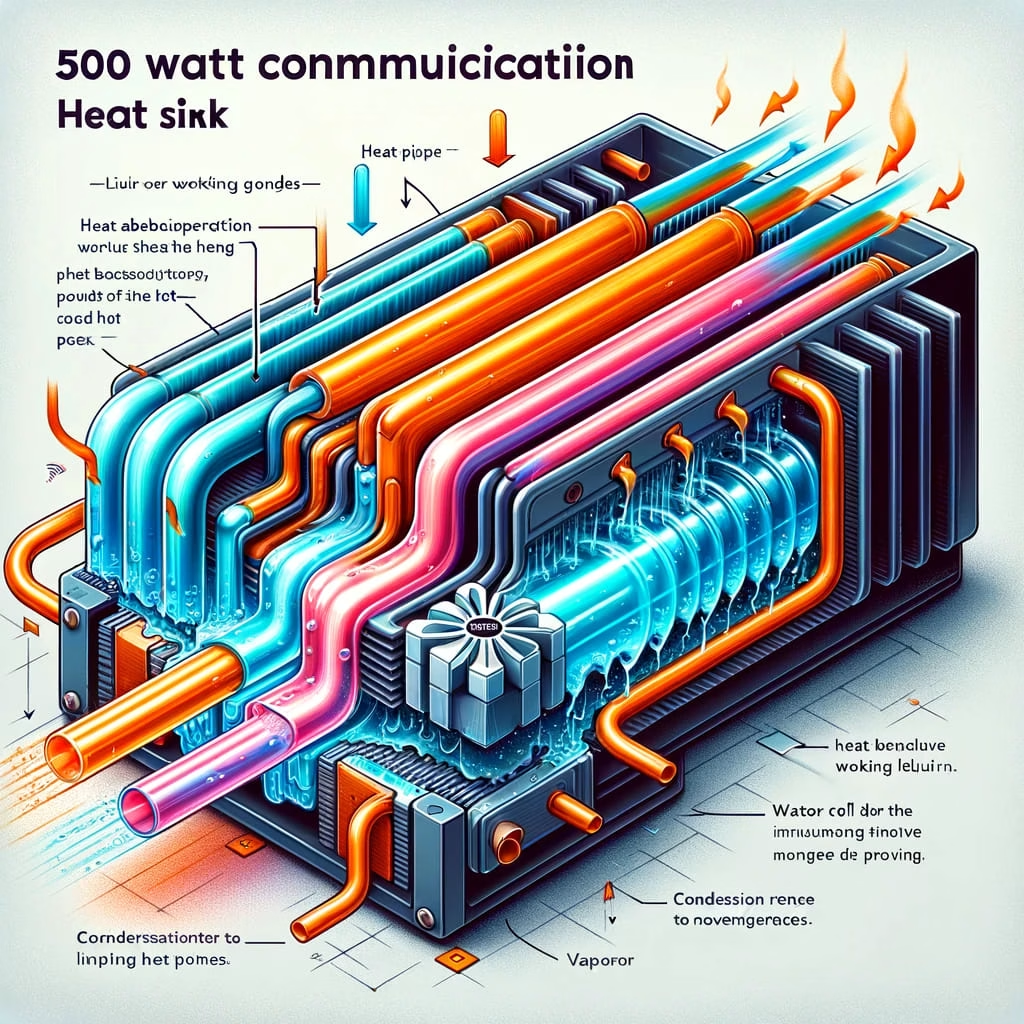
Un dissipatore di calore per il raffreddamento funziona secondo un principio termodinamico fondamentale: il calore fluisce naturalmente da una regione ad alta temperatura a una regione a temperatura inferiore.
Per ottenere basse temperature di giunzione, il calore subisce un processo di dissipazione termica in tre fasi:
Dopo aver illustrato i principi operativi di base, esaminiamo ora le principali tipologie di configurazioni di dissipatori di calore disponibili oggi.
I dissipatori di calore vengono classificati principalmente in base al loro meccanismo di funzionamento e alla fluidodinamica:
Una volta definite le categorie principali, il passo successivo fondamentale è comprendere in che modo la scelta dei materiali e i metodi di produzione influiscano sulle prestazioni termiche.
La scelta dei materiali e le tecniche di produzione influiscono direttamente sulla conduttività termica, sull'integrità strutturale, sul peso e sui costi di produzione.
| Metrico | Leghe di alluminio (ad esempio, 6063) | Rame puro |
| Conduttività Termica | ~200 W/m·K | ~400 W/m·K |
| Densità e peso | Leggero (~2.7 g/cm³) | Pesante (~8.9 g/cm³) |
| Capacità di produzione | Elevata estrudibilità in profili complessi | Ideale per alette scanalate e piastre ad alta conduttività |
| Costo e versatilità | Alto volume, conveniente | Prestazioni di alto livello per il calore ad alta densità |
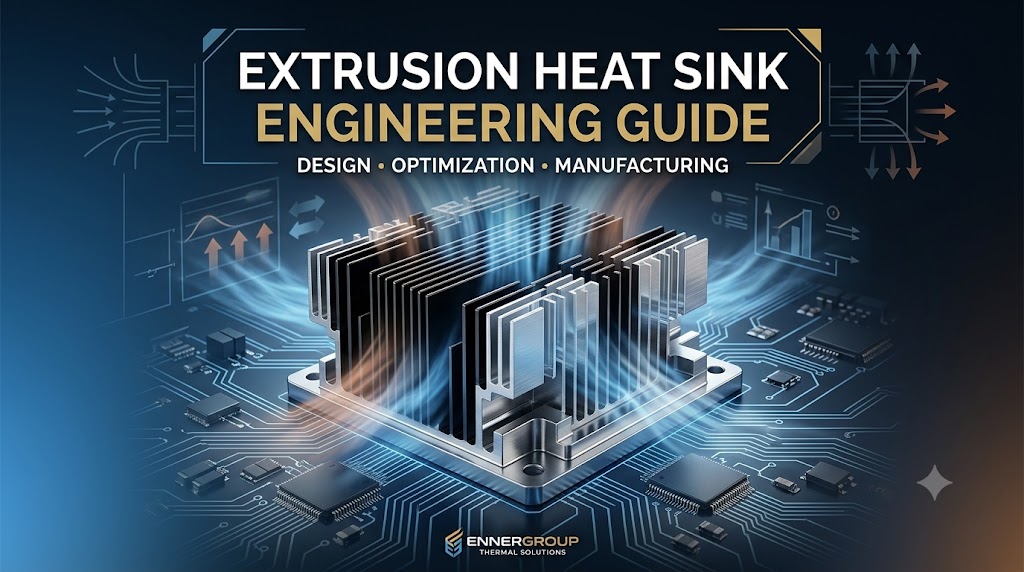
Spingendo il metallo riscaldato attraverso una matrice sagomata si ottengono profili continui con alette lunghe e dritte. Per progetti strutturali versatili ed economici, i team di ingegneri scelgono spesso i profili estrusi per la produzione in grandi volumi.
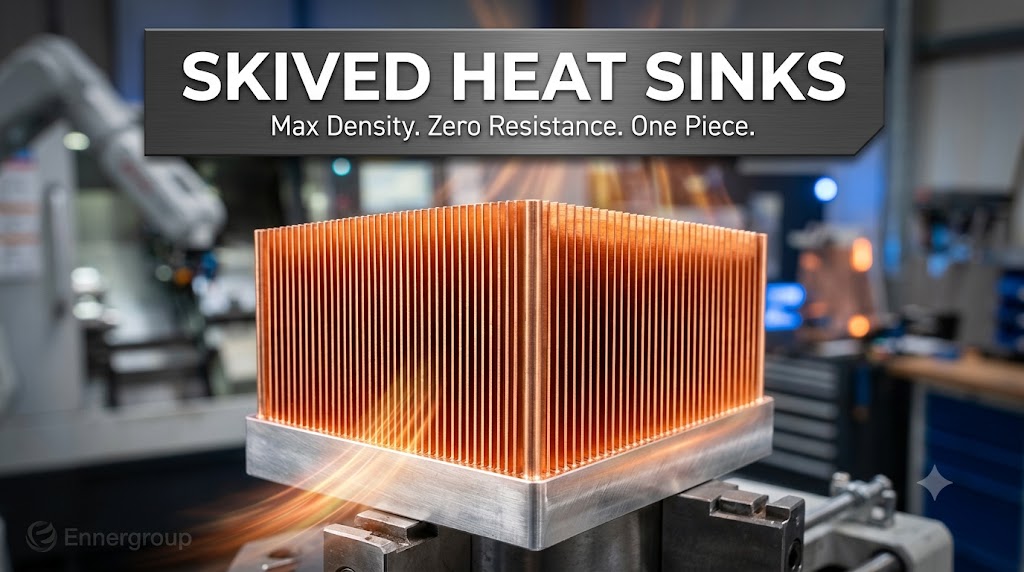
Un singolo blocco di metallo viene tagliato in alette ultrasottili e densamente impacchettate, eliminando la resistenza termica nel punto di giunzione tra la base e le alette.
Ideale per forme 3D complesse o configurazioni in lamiera sottile utilizzate nel raffreddamento a livello di scheda.
Configurazioni assemblate che consentono un'elevata densità di alette e combinazioni di materiali ibridi per scambiatori di calore industriali su larga scala.
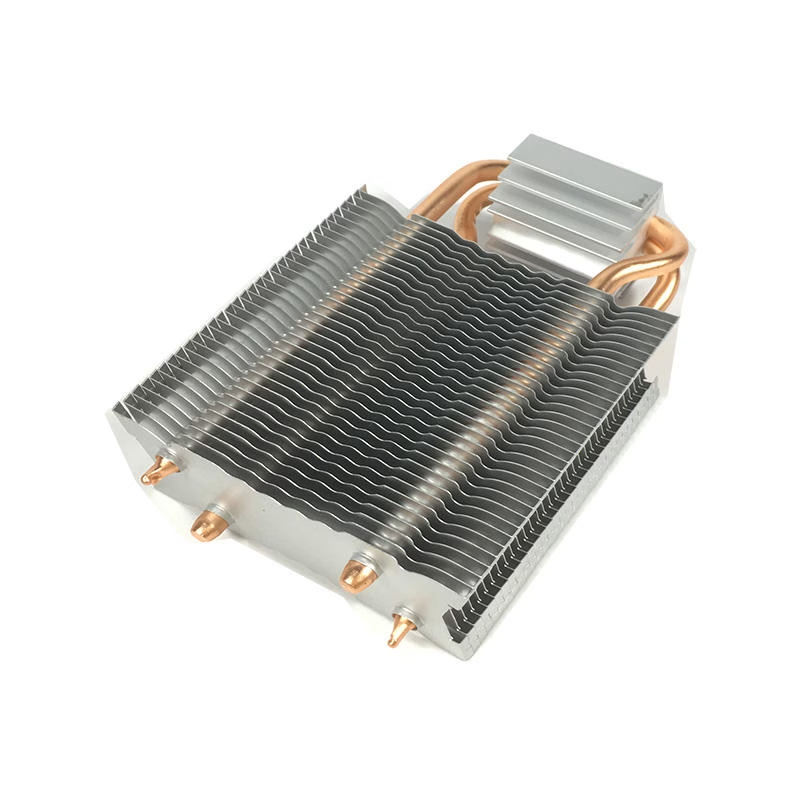
Dopo aver analizzato a fondo la produzione convenzionale di materiali metallici solidi, esaminiamo ora come l'ingegneria moderna supera i limiti di conduzione tradizionali su lunghe distanze. Fornitori leader di soluzioni termiche come Enner Group sono specializzati nello sviluppo di architetture di heat pipe standard e personalizzate per gestire questi flussi termici estremi. Per saperne di più sui sistemi di raffreddamento ad alte prestazioni specializzati, è possibile esplorare le loro soluzioni di raffreddamento a heat pipe dedicate.
Progettare una soluzione di raffreddamento efficace richiede di bilanciare diversi parametri termici e meccanici:
Anche le superfici metalliche più lisce presentano imperfezioni superficiali microscopiche. Per colmare queste lacune, sono necessari materiali di interfaccia termica.
Diversi settori industriali utilizzano profili di dissipatori di calore personalizzati in base alle condizioni spaziali, termiche e ambientali:
I tubi di calore offrono una conduttività termica effettiva molto più elevata rispetto all'alluminio o al rame massicci. Trasferiscono il calore su distanze maggiori con perdite di temperatura minime, distribuendo uniformemente i carichi termici su ampie superfici alettate.
Sono standard nel calcolo ad alte prestazioni, nelle telecomunicazioni, nell'elettronica di potenza, nei sistemi aerospaziali, nei dispositivi medici, nell'illuminazione a LED e nella gestione termica dei veicoli elettrici.
I tubi in rame ad alta purezza con stoppini in rame sinterizzato sono standard. Questi vengono solitamente abbinati a pacchi di alette e piastre di base in alluminio o rame per ottimizzare peso e prestazioni termiche.
Determinare la dissipazione di potenza totale, la temperatura di giunzione massima consentita, il flusso d'aria disponibile, l'ingombro spaziale e l'orientamento di montaggio.
Una gestione termica efficace richiede un equilibrio tra efficienza termica, dimensioni meccaniche, peso e costi di produzione. Che si tratti di profili in alluminio estruso standard o di tecnologie avanzate a tubi di calore bifase per carichi termici elevati, la scelta della configurazione corretta è fondamentale per il successo operativo.
Per assistenza tecnica, profili di estrusione personalizzati o integrazioni di raffreddamento su misura, contatta oggi stesso il nostro team di ingegneri per discutere le esigenze del tuo progetto.